Maintenance guide
Crawl Space Encapsulation Maintenance in Gastonia
Track humidity, water, liner condition, equipment, drainage, pests, and service history so small failures stay visible.
Disclosure: Gastonia Crawl Space Repair Help is an independent service that helps connect homeowners with local crawl space professionals. We do not perform contractor services ourselves. Your request may be shared with a local provider who can assist with your project.
Homeowner request path
Gastonia, NC- Share the crawl space issue you are seeing.
- Choose repair, encapsulation, moisture, drainage, or support help.
- Get connected with a local provider when available.
Keep a simple system record
Store the final scope, completion photos, permits, inspection record, product and equipment manuals, filter sizes, warranty terms, service contacts, humidity target, sensor location, condensate outlet, sump discharge, and test instructions together.
Monthly or routine visual checks
- Read and record humidity at the established monitor.
- Look from safe accessible areas for standing water, condensation, odor, pests, or liner movement.
- Check that equipment has power and no warning light or alarm is active.
- Confirm the access door closes as designed and service items have not damaged the liner.
Equipment and drainage checks
Follow the written schedule for dehumidifier filters and coils, condensate drains or pumps, sump pumps, alarms, backups, batteries, drain cleanouts, and discharge outlets. Watch the final outlet during a safe test and confirm water moves away from the foundation.
Liner and air-sealing checks
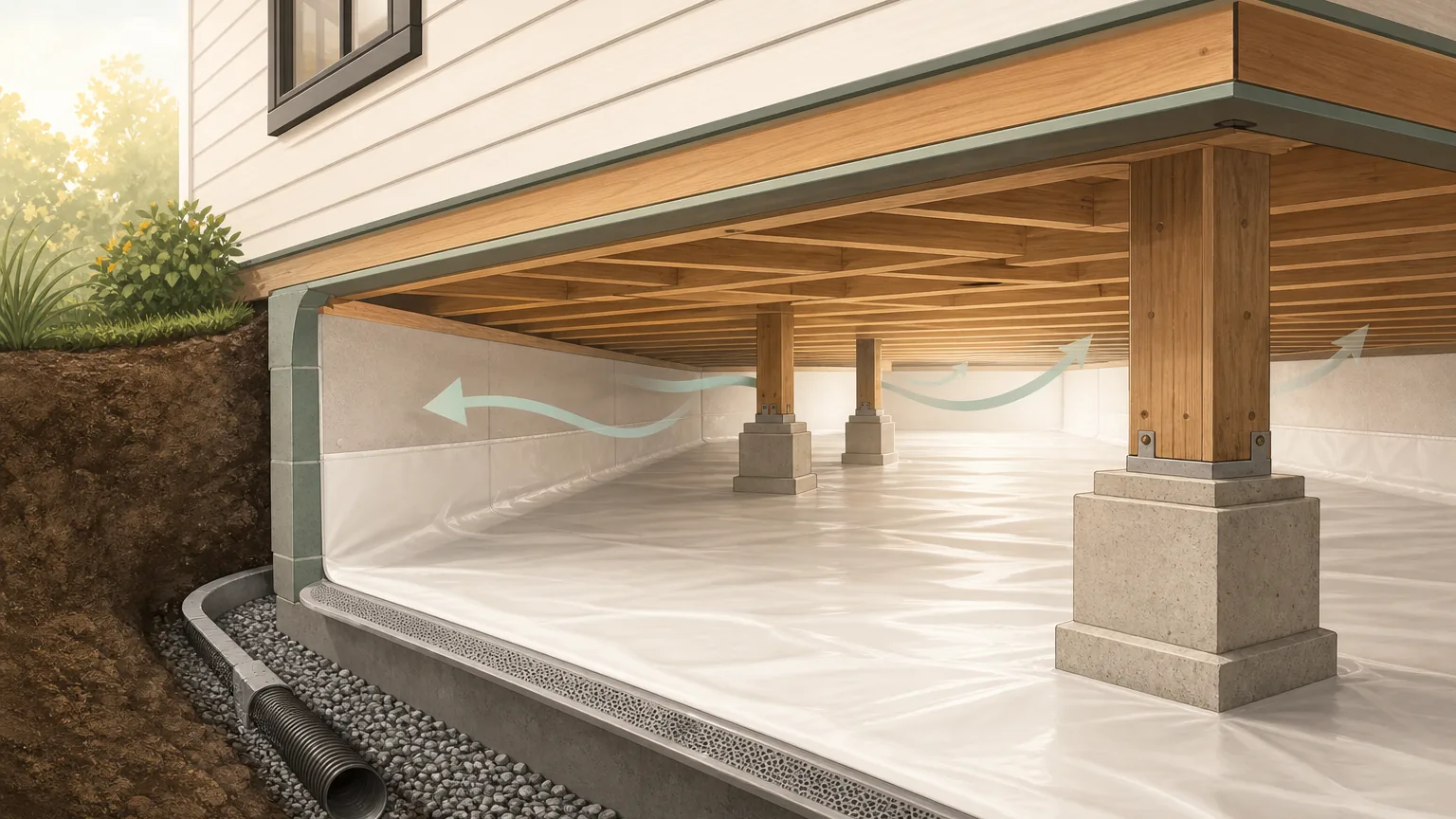
- Inspect accessible seams, edges, walls, piers, penetrations, sump lids, drains, and traffic paths.
- Look for tears, loose tape or attachment, pooled water, stains, pest damage, or sharp objects.
- Preserve required termite inspection visibility.
- Record damage before arranging a compatible repair.
After a storm, outage, or service visit
Check for new water entry, pump or backup operation, alarm history, condensate blockage, shifted material, open penetrations, and damage where a technician crossed the liner. Compare current photos and readings with the completion record.
When humidity rises
Confirm the reading and sensor location, then check power, settings, filters, coils, condensate, access closure, new leaks, standing water, and recent weather. Rising humidity can indicate equipment trouble, a new source, or an enclosure opening. Ask for diagnosis before replacing equipment.
Annual review questions
- Did humidity stay within the agreed operating range?
- Did the pump, backup, alarm, drains, and outlet pass their tests?
- Did pests, plumbing, heating and cooling service, or stored items affect the liner?
- Does any warranty require documented professional service?
- Have grading, gutters, downspouts, or discharge conditions changed?
Related help: encapsulation scope, humidity and dehumidifiers, and sump and drainage maintenance.
Helpful homeowner guidance
Maintenance keeps the enclosure verifiable
Humidity, equipment, drainage, liner, and access all need follow-up.
- NC State Extension recommends checking humidity, dehumidifier drip pans, sump operation, leaks, ground coverage, gutters, downspouts, and grade.
- The Department of Energy crawl-space guide includes a homeowner-awareness checklist for liner details, pest visibility, floor protection, humidistats, and water alarms.
- New standing water or equipment failure calls for source review instead of covering the symptom.
Sources: NC State Extension mold and moisture checklist, Department of Energy crawl-space guide
Disclosure: Gastonia Crawl Space Repair Help is an independent service that helps connect homeowners with local crawl space professionals. We do not perform contractor services ourselves. Your request may be shared with a local provider who can assist with your project.
Maintenance request
Ask about a system change
Share the installation age, humidity trend, equipment model, alarm history, water timing, liner condition, and last service.
Encapsulation maintenance questions
How often should encapsulation be inspected?
Follow the installer and equipment schedules. Homeowners commonly review accessible conditions after major storms, service visits, alarm events, or visible changes and arrange periodic professional service for equipment and hidden areas.
What humidity should I record?
Record readings against two NC State Extension benchmarks: keep humidity below 60 percent, with 30 to 50 percent identified as optimal. Follow the target and monitor location selected for the installed system.
What can damage an encapsulation liner?
Foot traffic, stored items, pests, sharp debris, service work, standing water, failed seams, movement at piers or walls, and an unsecured access path can damage liner material.
How do I test a sump or alarm?
Use the manufacturer and installer procedure. Avoid improvised electrical or water tests. Record the date, result, backup status, and final discharge observation.
What requires prompt service?
Prompt review is appropriate for standing water, wet wiring, alarm activation, failed pumps, blocked condensate, humidity above the agreed range, new liner movement, wet insulation, strong odor, or changing floors.