FAQ
Crawl Space Repair FAQ in Gastonia, NC
Plain answers about the request process, common crawl space issues, and what Gastonia-area providers may review.
Disclosure: Gastonia Crawl Space Repair Help is an independent service that helps connect homeowners with local crawl space professionals. We do not perform contractor services ourselves. Your request may be shared with a local provider who can assist with your project.
Homeowner request path
Gastonia, NC- Share the crawl space issue you are seeing.
- Choose repair, encapsulation, moisture, drainage, or support help.
- Get connected with a local provider when available.
Request and repair questions
Does this website perform crawl space repair directly?
No. Gastonia Crawl Space Repair Help is an independent service that helps connect homeowners with local crawl space professionals. A request may be shared with a local provider who can assist with the project.
What problems usually need crawl space repair?
Common issues include moisture, standing water, mold concerns, wood rot, pest damage, damaged insulation, and sagging floor supports.
How much does crawl space repair cost in Gastonia?
Most full crawl space projects run $3,000 to $15,000, or about $3 to $10 per square foot. Basic vapor barrier work sits lower, around $1,000 to $4,000. Full encapsulation combined with drainage or structural repairs can reach $20,000 or more. Size, access, the water source, and needed structural repairs set the final number. See the Gastonia crawl space repair cost guide for scope-by-scope ranges.
Is encapsulation the same as repair?
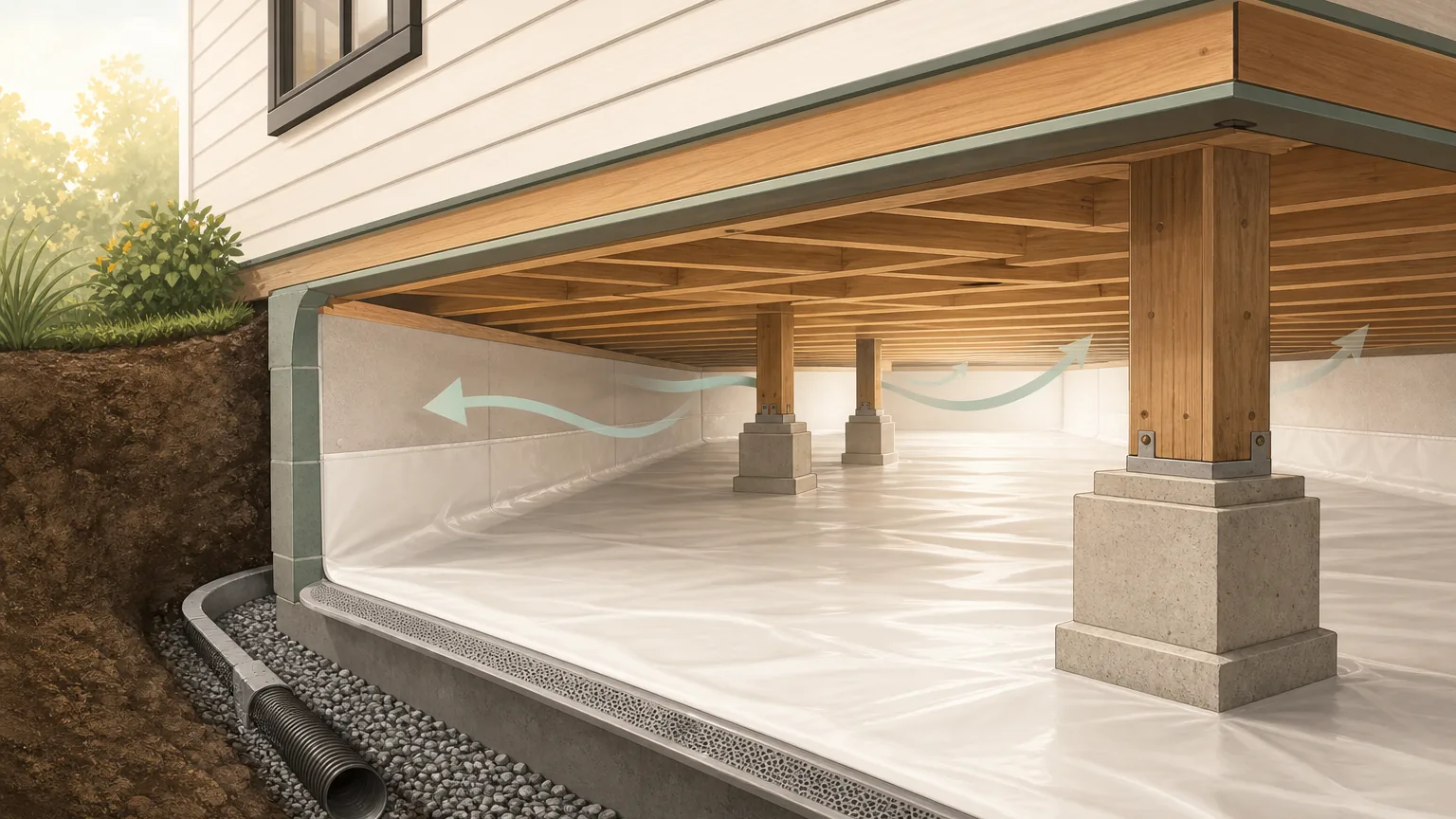
Encapsulation focuses on sealing and moisture control. Repair may include drainage, insulation removal, vapor barriers, wood repair, or support correction.
Do I need a vapor barrier or full encapsulation?
A vapor barrier may help when the main issue is exposed ground moisture. Full encapsulation can involve sealed seams, wall liners, access improvements, drainage planning, and humidity control. A provider can review the crawl space before recommending either option.
Can crawl space problems cause sagging floors?
Moisture, wood rot, damaged joists, weakened beams, or settling supports under a home can contribute to soft, uneven, or bouncy floors. A crawl space inspection helps separate structural concerns from moisture-control issues.
When should crawl space insulation be removed?
Removal may make sense when insulation is wet, fallen, dirty, pest-damaged, moldy, or holding odors. A provider can check moisture sources before recommending replacement, vapor barrier work, or encapsulation.
Can a crawl space cause a musty smell upstairs?
Yes. Moisture, wet insulation, exposed soil, or organic growth concerns under the home can push odors into living spaces. A provider can inspect the crawl space and help identify the moisture source before recommending cleanup, drainage, vapor barrier, or encapsulation work.
What should I do if there is standing water in the crawl space?
Avoid crawling through standing water yourself. Note when the water appears, take photos from the access opening if safe, and request help from a provider who can review drainage, grading, vapor barrier condition, and possible sump or discharge needs.
How fast can someone contact me?
Response times vary by provider availability. Calling is usually the fastest way to request help.
Inspection, moisture, and hiring questions
What should a crawl space inspection document?
A useful inspection documents safe access, exterior and interior water, drains and discharge, humidity, ground coverage, insulation, visible framing and supports, pests, mechanical equipment, labeled photos, measurements, priorities, and the reason for each proposed correction.
Does closing an existing vented crawl space require a permit in North Carolina?
A permit is required when an existing conventionally vented crawl space becomes a closed crawl space, according to North Carolina Office of State Fire Marshal guidance dated December 11, 2025 and its cited code pathway. Check current Gaston County requirements.
What crawl space humidity level should I watch?
NC State Extension describes 30 to 50 percent as optimal and directs that humidity remain below 60 percent. Interpret each reading in light of temperature, weather, sensor location, and the building system.
Can a dehumidifier fix standing water?
A dehumidifier removes moisture from air. Active plumbing, stormwater, groundwater, drain, and sump problems need source correction or drainage.
What should a sump-pump estimate include?
Ask about the collection path, basin, sealed lid, pump and capacity assumptions, check valve, alarm, backup, electrical work, discharge route, testing, maintenance, and warranty.
Do I need a mold test when growth is visible?
EPA guidance says testing is generally unnecessary when visible mold is present. Correct the moisture source and follow suitable cleaning, removal, containment, and professional guidance for the affected area and materials.
How should I compare repair estimates?
Compare the source, preparation, products and quantities, drainage and discharge, electrical work, permits, insulation, structural work, exclusions, change orders, completion checks, maintenance, and warranty. The North Carolina Department of Justice recommends comparing three written estimates.
What happens after I submit the form?
This independent service reviews the request and may share it with a local provider when one is available. A provider may contact you for more details. Submission does not guarantee contact, an appointment, an estimate, or service.