Roof runoff and grading
Check overflowing gutters, short or disconnected downspouts, low soil beside the foundation, sprinklers, and water that returns toward the house.
Waterproofing help
For water involving the crawl space only, including basement-waterproofing searches when the concern is under the home. Compare entry, drainage, sump, and discharge before sealing.
Disclosure: Gastonia Crawl Space Repair Help is an independent service that helps connect homeowners with local crawl space professionals. We do not perform contractor services ourselves. Your request may be shared with a local provider who can assist with your project.
Homeowner request path
Gastonia, NCQuick answer: Crawl space waterproofing manages the complete bulk-water path: divert surface runoff, intercept water that reaches the crawl space, evacuate it, then seal after the space stays dry. Interior drainage commonly runs $2,000 to $8,000, with an installed sump pump around $600 to $2,500. Share when the water appears and where it collects to request local contact.
Basement waterproofing search note: This page applies only when a basement-waterproofing search involves water entering, collecting in, or being discharged from the crawl space. It does not describe broad basement waterproofing services.
Gastonia crawl space waterproofing should start by finding where water enters, where it collects, and where it can safely drain. A useful review separates active water from normal humidity so the homeowner does not pay for encapsulation before the drainage problem is clear.
Check overflowing gutters, short or disconnected downspouts, low soil beside the foundation, sprinklers, and water that returns toward the house.
Map wall entry, floor low spots, soil saturation, cracks, existing foundation drains, and the timing of water after long or intense rain.
Look for supply or drain leaks, water-heater pans, heating and cooling drain lines, and wet areas that do not follow the weather.
Check blocked drains, an unpowered or undersized pump, failed check valves, a full basin, damaged discharge lines, and water returning near the foundation.
Gastonia's Piedmont red clay can stay saturated after heavy rain, so surface corrections may need an interior collection and pumping step before sealing makes sense.
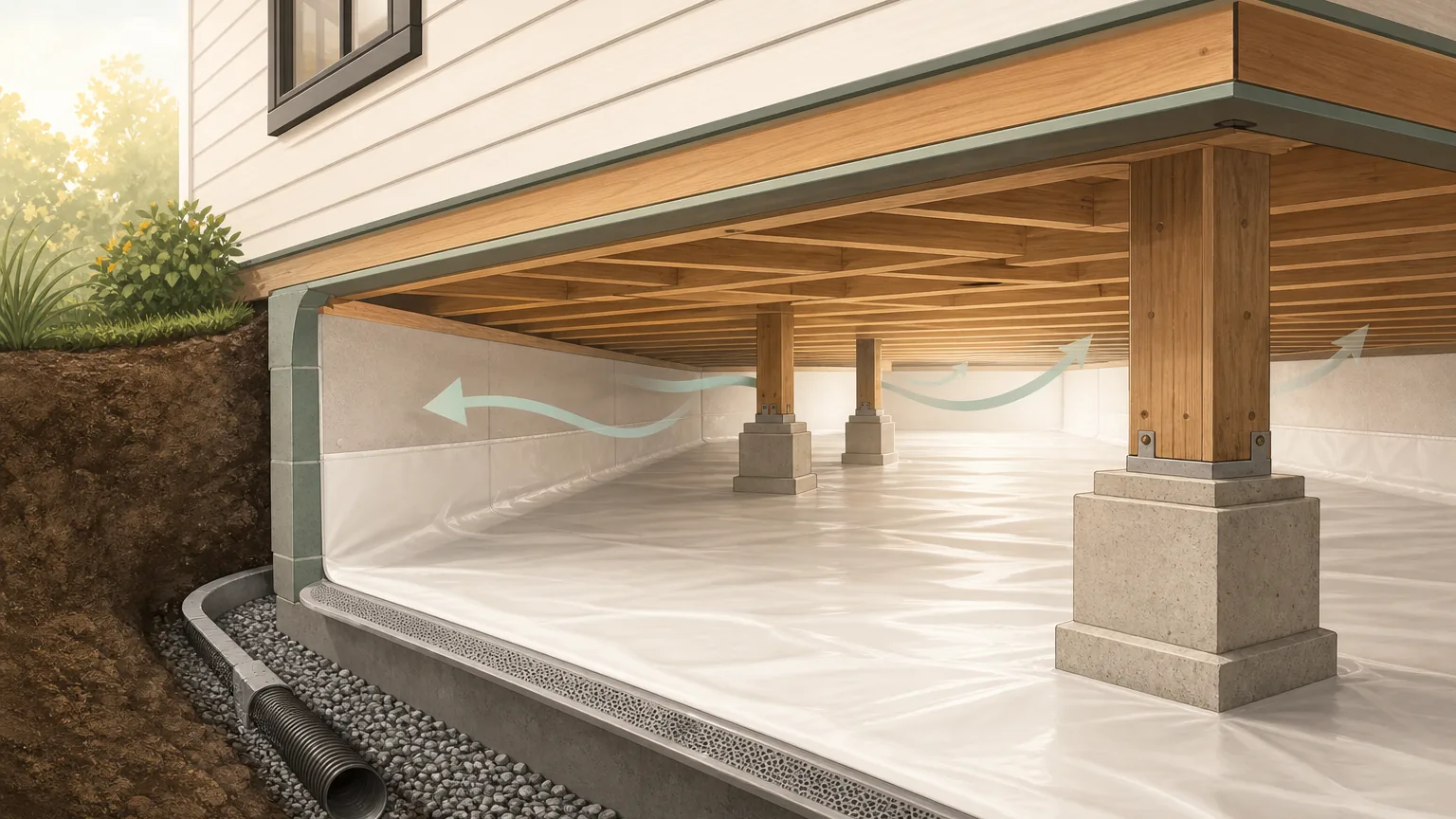
Waterproofing is the full strategy from roof runoff to the final outlet. Drainage focuses on the collection pipe, basin, pump, and discharge hardware. Encapsulation seals ground and wall moisture after active water is controlled; a basic vapor barrier covers the soil without replacing the water-management plan.
If water has already damaged insulation, wood, supports, or floors, start with crawl space repair in Gastonia. If you mainly want price context, review crawl space repair cost factors.
Interior drainage commonly runs $2,000 to $8,000, and an installed sump pump runs about $600 to $2,500. The water source, channel length, basin and pump, backup system, electrical work, discharge distance, excavation, red-clay soil, access, exterior corrections, debris, damaged materials, permits, and repairs discovered after drying determine the final scope.
Share when water appears, how long it remains, its deepest point if safely known, the affected side of the home, downspout and grading conditions, pump history, recent plumbing work, power-outage history, access limits, and photos taken from a safe location. A provider may request the actual photos after contact.
Related help: drainage and standing water, sump and drainage-system planning, moisture control, water damage checklist, and emergency water problems.
Helpful homeowner guidance
North Carolina and federal guidance supports checking exterior runoff, interior sources, sump equipment, soil coverage, and the final drainage outlet as one water-management path.
Sources: NC State Extension mold and moisture checklist, Gaston County inspection turn-down list, Department of Energy crawl-space guide
Disclosure: Gastonia Crawl Space Repair Help is an independent service that helps connect homeowners with local crawl space professionals. We do not perform contractor services ourselves. Your request may be shared with a local provider who can assist with your project.
Waterproofing request
Use this request when water returns after storms, soil stays wet, insulation gets damp, or you need drainage, sump, discharge, vapor barrier, or encapsulation options compared.
Common sources include roof runoff near the foundation, negative grading, foundation entry, groundwater, plumbing leaks, heating or cooling condensate, clogged drains, and failed sump equipment. Timing and location help separate the sources.
Yes. A useful review checks gutters, downspouts, grading, sprinklers, low areas, and existing outlets before deciding whether interior collection and pumping are also needed.
Ask for basin and pump details, capacity assumptions, check valve, lid, alarm, backup option, electrical work, discharge route, maintenance, and a test of where the water exits.
A liner can limit ground vapor and protect surfaces, but it does not remove every source of liquid water. Recurring entry, pooling, drainage, and discharge should be addressed in the scope.
An interior drainage scope commonly runs $2,000 to $8,000, and an installed sump pump runs about $600 to $2,500. Exterior corrections, backup power, discharge length, cleanup, electrical work, sealing, and structural damage can change the total.
Stay out and seek prompt help when water reaches wiring or heating and cooling equipment, follows a sewage or major plumbing event, rises quickly, saturates structural wood, or appears with sudden floor movement.