Stormwater or groundwater
Record rainfall timing, wettest side, downspouts, grading, low areas, drains, pump status, and the visible outlet.
Urgent water guide
Water under the house can move from nuisance to damage quickly. Start with safety, document what changed, then request help before the next storm repeats it.
Disclosure: Gastonia Crawl Space Repair Help is an independent service that helps connect homeowners with local crawl space professionals. We do not perform contractor services ourselves. Your request may be shared with a local provider who can assist with your project.
Homeowner request path
Gastonia, NCQuick answer: Stay out if water is near wiring, gas equipment, sewage, or unstable framing. Stop an obvious source from a safe shutoff, document the damage, remove water once hazards are controlled, and start drying within 24 to 48 hours. Wet crawl-space repair commonly runs $1,500 to $5,000 before permanent drainage or structural work. Share what happened and whether the water is still rising to request local contact.
Start safely
Standing water can hide sharp debris, pests, weak flooring, and electrical hazards. If you see water near wiring, mechanical equipment, sparking, or immediate danger, stay out and contact the appropriate utility, emergency service, or licensed professional first.
Record rainfall timing, wettest side, downspouts, grading, low areas, drains, pump status, and the visible outlet.
Note whether water continues during dry weather and whether a fixture, supply line, drain, water heater, or heating and cooling system is involved.
Keep people and pets away and contact a qualified professional experienced with contaminated-water cleanup.
Avoid the affected room or crawl space and contact the appropriate emergency, utility, electrical, or structural professional.
Rising water, electrical or gas exposure, sewage, a major active leak, unsafe access, sudden floor movement, or a failed pump during a storm needs immediate action. Damp soil without standing water, a stable old stain, or minor liner damage can usually wait for a planned inspection, provided conditions are documented and monitored.
A portable pump or wet vacuum removes today's water. It does not correct roof runoff, grading, saturated red clay, foundation entry, or a high water table. Recurring stormwater needs a permanent collection and discharge plan through the drainage guide; an active plumbing source belongs with a plumber.
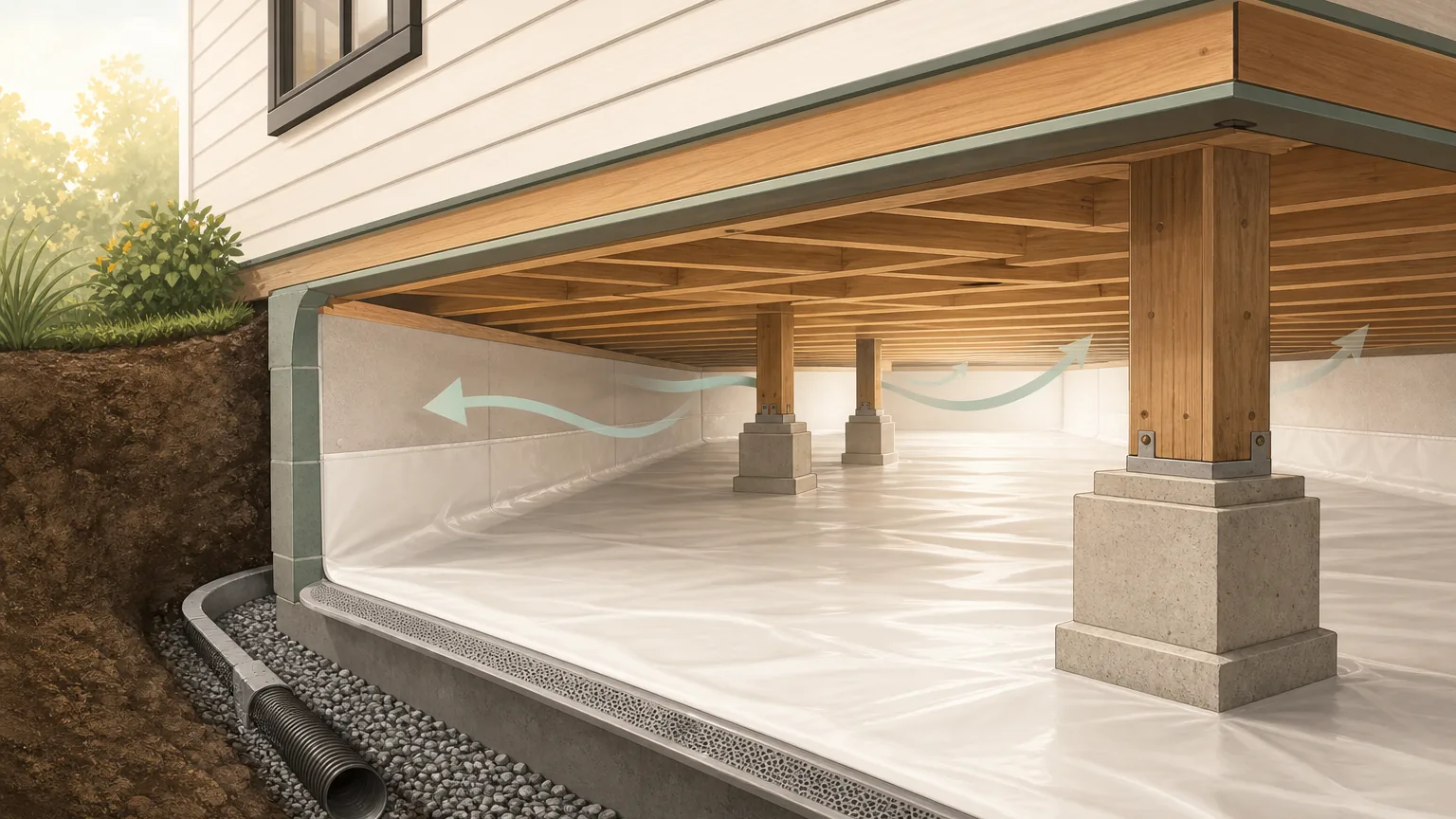
A provider can look at exterior drainage, grading, crawl-space access, vapor barrier condition, insulation, visible wood concerns, low spots, and whether water control needs to happen before repair or encapsulation.
Wet crawl-space repair commonly runs $1,500 to $5,000. Permanent interior drainage commonly runs $2,000 to $8,000, with an installed sump pump around $600 to $2,500. Cleanup, contaminated material, insulation, electrical work, and structural damage can create separate line items. Compare them in the repair cost guide.
Keep dates, weather, source, water depth if safely known, affected rooms, photographs, videos, receipts, emergency contacts, equipment or alarm history, and actions taken. Avoid discarding damaged material before documenting it unless safety or official instructions require removal.
After immediate safety concerns are handled, review crawl space waterproofing in Gastonia for active-water solutions. The standing-water guide helps document recurring puddles, and the cost guide explains scope factors.
Disclosure: Gastonia Crawl Space Repair Help is an independent service that helps connect homeowners with local crawl space professionals. We do not perform contractor services ourselves. Your request may be shared with a local provider who can assist with your project.
Water problem request
Include when the water appeared, where it collects, whether it comes back after every storm, and whether insulation, wood, or the vapor barrier looks affected.
Stay out when water is near wiring, gas equipment, sewage, or unstable framing. Stop an obvious plumbing source from a safe shutoff, document conditions from the access opening, remove water once the area is safe, and begin aggressive drying within 24 to 48 hours.
Not always. Water that is touching electrical equipment, causing active structural damage, blocking safe access, or returning after every storm deserves faster attention. A provider can help separate urgent safety issues from planned repair work.
Avoid entering a wet crawl space or using a pump or wet vacuum near wiring unless a qualified professional has confirmed the area is safe. Water removal comes after electrical, gas, sewage, structural, and source hazards are controlled.
Helpful details include when the water appears, whether it is standing or damp soil, whether gutters or downspouts discharge nearby, whether insulation is wet, and whether a sump pump or vapor barrier is already present.
The source and hazard decide. Call emergency services or the utility for immediate danger, an electrician for electrical exposure, a plumber for an active plumbing source, a qualified cleanup professional for sewage or contaminated water, and a structural professional when movement or collapse risk is suspected.
Wet crawl-space repair commonly runs $1,500 to $5,000 before a permanent drainage or structural scope is added. Interior perimeter drainage commonly runs $2,000 to $8,000, and an installed sump pump runs about $600 to $2,500.