After-rain standing water
Standing Water in a Crawl Space After Rain in Gastonia, NC
Use this guide when puddles or muddy soil return after storms. Compare the water source, drainage path, sump equipment, and final discharge before choosing a scope.
Disclosure: Gastonia Crawl Space Repair Help is an independent service that helps connect homeowners with local crawl space professionals. We do not perform contractor services ourselves. Your request may be shared with a local provider who can assist with your project.
Homeowner request path
Gastonia, NC- Share the crawl space issue you are seeing.
- Choose repair, encapsulation, moisture, drainage, or support help.
- Get connected with a local provider when available.
Quick answer: Recurring standing water needs a collection route and a reliable outlet, not ground cover alone. Interior perimeter drainage commonly runs $2,000 to $8,000, with an installed sump pump around $600 to $2,500. Note where water collects and how soon it appears after rain, then request local contact.
What homeowners usually notice first
Drainage problems often appear after heavy rain, grading changes, clogged discharge paths, or long stretches of humid weather. The first sign may be muddy soil, puddles near the access door, or a smell that returns after storms.
- Standing water, puddles, or muddy low spots
- Water lines, staining, or damp foundation walls
- Wet insulation or damaged vapor barrier sections
- Musty odor after rain
- Soft floors, wood rot concerns, or pest activity near damp areas
Use timing and location to narrow the source
Water that appears during a storm may follow roof runoff, downspouts, splash-back, grading, or foundation entry. Water that rises after prolonged rain may involve saturated soil or groundwater. A wet area unrelated to weather may point to plumbing, heating and cooling condensate, or a drain. Mark the wettest point and the delay between rain and water.
Check exterior conditions first
From outside, document gutter overflow, disconnected or short downspouts, low soil beside the foundation, sprinklers, erosion, blocked outlets, and water that drains back toward the home. Downspout extensions, grading, and catch basins can reduce the load on the interior system, but standing water after each rain can signal saturated soil or a high water table that needs active pumping.
Interior drainage decision points
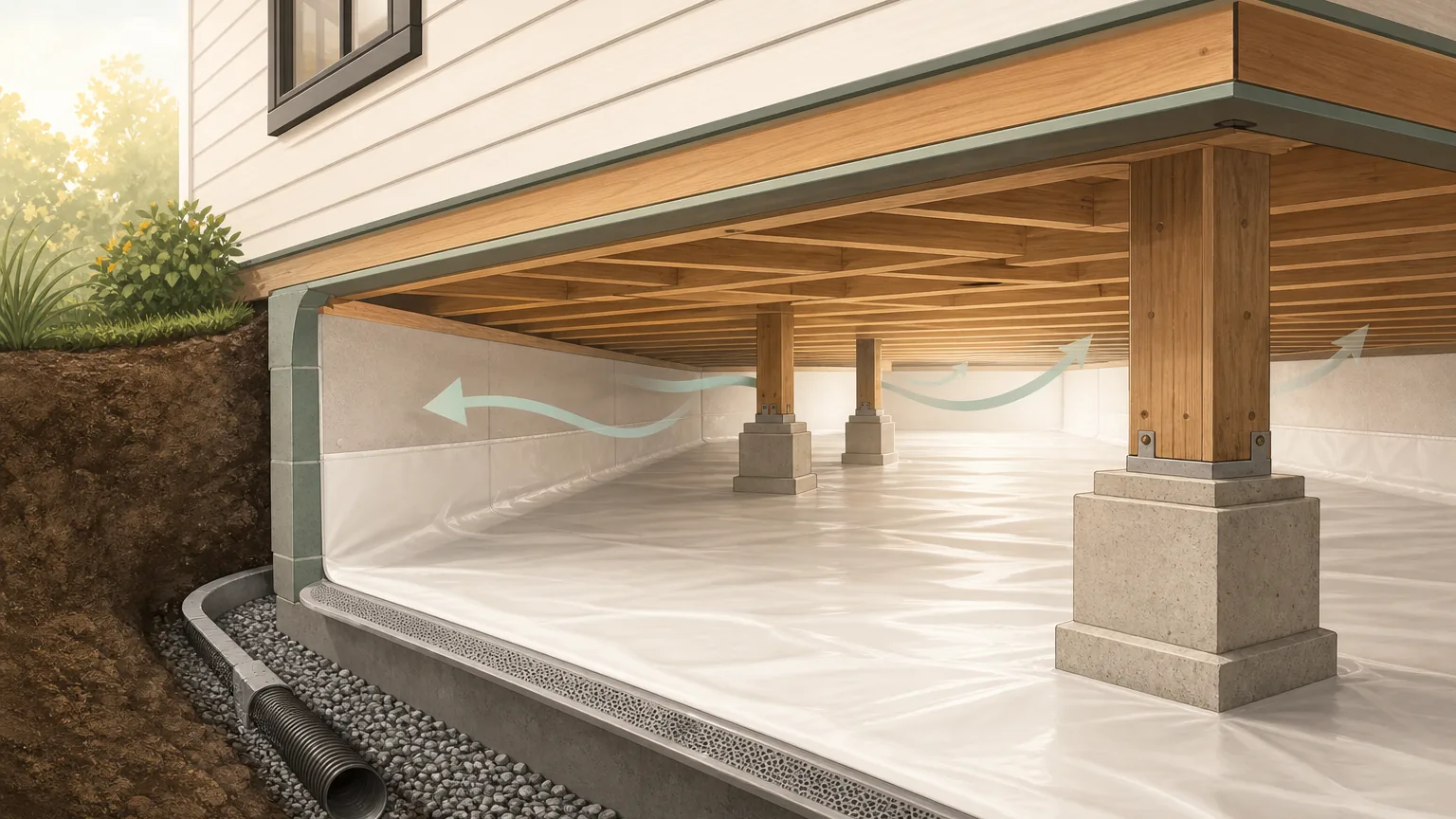
An interior perimeter drain uses perforated pipe in a gravel-filled trench around the inside edge of the crawl space. Filter fabric separates Gastonia's fine red clay from the gravel and pipe openings so sediment does not clog the collection path. The trench slopes toward a sump basin placed at the low point and sized for the expected inflow without excessive pump cycling.
- Pump type. A submersible pump sits inside the basin and keeps the assembly compact and quieter. A pedestal pump keeps the motor above the basin for easier access but needs clear vertical space.
- Flow control. A check valve keeps water in the discharge pipe from falling back into the basin after the pump stops. A high-water alarm and battery or water-powered backup protect against pump or power failure.
- Discharge. Route the line well away from the foundation to daylight or an approved outlet. The scope should state the minimum discharge distance and how positive slope will keep water from looping back toward the wall. Protect exposed sections from freezing and keep the outlet open.
- Service access. The basin, pump, check valve, filter fabric, drain, and outlet need a testing and cleaning plan. The estimate should identify electrical and permit work.
When the issue needs urgent attention
Ask for help quickly when water returns after each rain, reaches insulation or wood framing, blocks safe access, or sits long enough to create odor and humidity problems. Avoid entering a wet crawl space if electrical, animal, or contamination risks may exist.
How drainage differs from waterproofing and encapsulation
Drainage owns the hardware that collects and evacuates water. Crawl space waterproofing in Gastonia is the wider bulk-water strategy that also addresses roof runoff, grading, entry, and the final outlet. Encapsulation seals ground and wall moisture after the drain, sump, and discharge path are working.
What affects cost
Interior perimeter drainage commonly runs $2,000 to $8,000, and an installed sump pump runs about $600 to $2,500. Trench length, red-clay excavation, filter fabric, basin and pump selection, backup equipment, electrical work, discharge distance, access, exterior correction, and removal of wet insulation or damaged liner determine the final scope.
Maintenance after drainage work
Keep the collection route, basin, pump, check valve, alarm, backup, power, discharge line, and outlet on a written test schedule. Recheck the crawl space and exterior after a major storm or outage. Investigate a change in pump frequency instead of assuming the equipment has solved a new source.
What to ask before hiring a provider
- Will you identify where the water is coming from?
- Will the quote separate drainage, cleanup, vapor barrier, insulation, and encapsulation items?
- Where will water discharge if a drain or sump is recommended?
- Can you review photos with me before work begins?
Related help: crawl space waterproofing in Gastonia, sump and drainage systems, heavy-rain safety, moisture control, and cost factors.
Helpful homeowner guidance
Standing water requires a full path to an outlet
The source, collection route, pump or drain, and final discharge all affect whether water returns.
- NC State Extension connects interior sump and floor-drain checks with plumbing, foundation, grade, downspout, and gutter conditions outside the crawl space.
- Local inspection guidance ties two endpoints together: the site grade must shed water away, and the crawl-space drain must reach daylight behind protection from rodent entry.
Sources: NC State Extension mold and moisture checklist, Gaston County inspection turn-down list
Disclosure: Gastonia Crawl Space Repair Help is an independent service that helps connect homeowners with local crawl space professionals. We do not perform contractor services ourselves. Your request may be shared with a local provider who can assist with your project.
Standing water request
Ask about water under the home after rain
Use this request when water returns after storms, collects near the access door, leaves mud under the home, or reaches insulation or framing. Describe where water appears and whether downspouts, grading, or low spots may be contributing.
- Say when the water appears: after rain, all the time, or seasonally.
- Note if access is unsafe, blocked, muddy, or near electrical concerns.
- Ask whether drainage should be corrected before vapor barrier or encapsulation work.
Common homeowner questions
Why does water appear only after rain?
Rain timing can point toward roof runoff, downspouts, grade, foundation entry, groundwater, blocked drains, or a discharge line that returns water toward the home. Record the delay, duration, and wettest side.
Should I start outside or inside?
Start by checking safe exterior conditions such as gutters, downspouts, grade, low areas, and visible outlets. Interior drainage may still be needed when water enters or rises despite suitable exterior control.
What sump and discharge details matter?
The perimeter drain should feed a basin at the low point. Compare submersible and pedestal pumps, basin sizing, check valve, sealed lid, alarm, battery or water-powered backup, electrical work, freeze protection, discharge destination, testing, and maintenance.
Can I encapsulate after one dry week?
A dry visit does not prove the source is corrected. Use weather history, stains, sediment, drainage tests, and prior photos to evaluate recurring water before sealing the surface.
How much does crawl space drainage cost in Gastonia?
Interior perimeter drainage commonly runs $2,000 to $8,000, and an installed sump pump runs about $600 to $2,500. Trench length, red-clay soil, basin and pump selection, backup power, electrical work, discharge routing, access, and cleanup affect the final total.
What water requires specialist cleanup?
Sewage, contaminated floodwater, extensive water damage, and water near electrical or heating and cooling equipment require additional safety and qualified professional guidance.