Damp crawl space help
Crawl Space Moisture Control in Gastonia, NC
Damp crawl spaces can affect insulation, wood, odors, and comfort upstairs. Request contact from a provider serving Gastonia and nearby communities.
Disclosure: Gastonia Crawl Space Repair Help is an independent service that helps connect homeowners with local crawl space professionals. We do not perform contractor services ourselves. Your request may be shared with a local provider who can assist with your project.
Homeowner request path
Gastonia, NC- Share the crawl space issue you are seeing.
- Choose repair, encapsulation, moisture, drainage, or support help.
- Get connected with a local provider when available.
Signs moisture needs a closer look
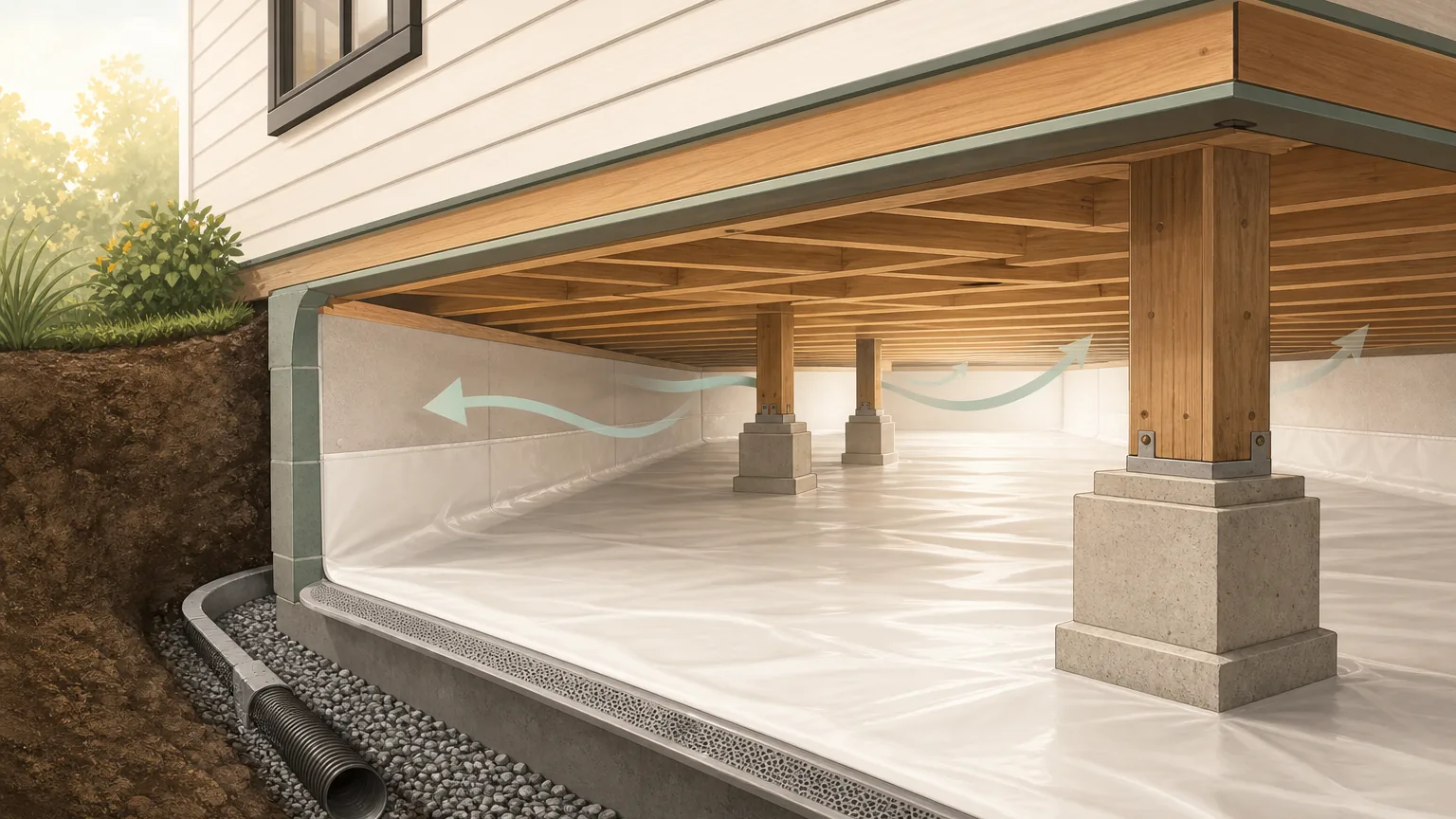
Moisture control starts with finding the source. A crawl space may need drainage work, better ground coverage, sealed access points, insulation removal, encapsulation, or humidity control.
- Standing water after rain or muddy low spots
- Damp soil, condensation, or visible staining
- Musty smells moving into living spaces
- Wet or fallen insulation
- Wood rot concerns, soft floors, or pest activity
Separate liquid water, ground vapor, and humid air
Liquid water may come from rain, groundwater, plumbing, condensate, drains, or sump failure. Ground vapor moves upward from exposed or poorly covered soil. Humid outdoor air can enter through vents, doors, and penetrations and condense on cooler ducts, pipes, framing, or insulation. Route liquid water to drainage or waterproofing, ground vapor to vapor-barrier planning, humid air to the humidity guide, and odor or growth concerns to the mold and musty odor page. Use the humidity and dehumidifier guide for measurement practice and monitoring; the moisture-damage signs guide covers humidity thresholds.
Choose the control that matches the source
- Correct plumbing and condensate leaks at the source.
- Manage roof runoff, grading, foundation entry, drains, sumps, and discharge for bulk water.
- Repair or replace ground coverage when exposed soil is the main vapor source.
- Consider a coordinated closed-crawl-space plan when air leakage and ground vapor continue after prerequisites are handled.
- Size and drain humidity equipment for the actual enclosure and follow the manufacturer maintenance instructions.
What to compare in an estimate
Compare the stated moisture source, the correction assigned to each source, work sequence, insulation handling, permit responsibility, exclusions, and warranty terms. Use the humidity guide to compare equipment, condensate, and monitoring details. The humidity and dehumidifier guide covers condensate, operation, maintenance, monitoring, and equipment warning signs.
What to describe when you call
Share when the moisture appears, whether water enters after storms, which rooms smell musty, whether floors feel soft or uneven, and any humidity readings. Describe what existing drains, pumps, liners, vents, ducts, or dehumidifiers are doing.
Related pages: humidity and dehumidifier planning, vapor barrier help, crawl space waterproofing, insulation removal help, encapsulation help, and crawl space repair cost factors.
Helpful homeowner guidance
Humidity control starts with measurement and source correction
North Carolina and federal guidance supports checking readings, liquid-water sources, ground coverage, equipment, and condensate together.
- NC State Extension treats moisture review as source tracing across foundation and plumbing leaks, sump function, soil coverage, gutters, downspouts, and grading.
- The Department of Energy organizes crawl-space evaluation across water entry, drainage, ground coverage, air sealing, insulation, condensate, and humidity equipment.
Sources: NC State Extension mold and moisture checklist, Department of Energy crawl-space guide
Disclosure: Gastonia Crawl Space Repair Help is an independent service that helps connect homeowners with local crawl space professionals. We do not perform contractor services ourselves. Your request may be shared with a local provider who can assist with your project.
Request moisture control help
Common moisture-control questions
What are the signs that a crawl space needs moisture control?
Common signs include standing water or muddy soil after rain, damp soil or visible condensation, musty smells moving into living spaces, wet or fallen insulation, and wood rot concerns or pest activity near damp areas.
What does crawl space moisture control involve?
Moisture control may include finding the moisture source first, then addressing it with drainage improvements, better ground coverage with a vapor barrier, sealed access points, insulation removal, encapsulation, or humidity control depending on what is found.
What information should I share when requesting moisture control help?
Share when the moisture appears, whether water enters after storms, which rooms smell musty, and whether floors feel soft or uneven. Photos can help a provider understand urgency before scheduling an inspection.
Can moisture control and encapsulation be done together?
Yes, many homes need both. Drainage work focuses on moving water away from the crawl space while encapsulation focuses on sealing ground moisture and controlling humidity. Many providers recommend correcting drainage first so that full encapsulation can hold up over time.