Moisture prevention
Crawl Space Vapor Barrier in Gastonia, NC
A damaged or missing vapor barrier can leave damp ground exposed under the home. Request help from a provider serving the Gastonia area.
Disclosure: Gastonia Crawl Space Repair Help is an independent service that helps connect homeowners with local crawl space professionals. We do not perform contractor services ourselves. Your request may be shared with a local provider who can assist with your project.
Homeowner request path
Gastonia, NC- Share the crawl space issue you are seeing.
- Choose repair, encapsulation, moisture, drainage, or support help.
- Get connected with a local provider when available.
When a vapor barrier may need attention
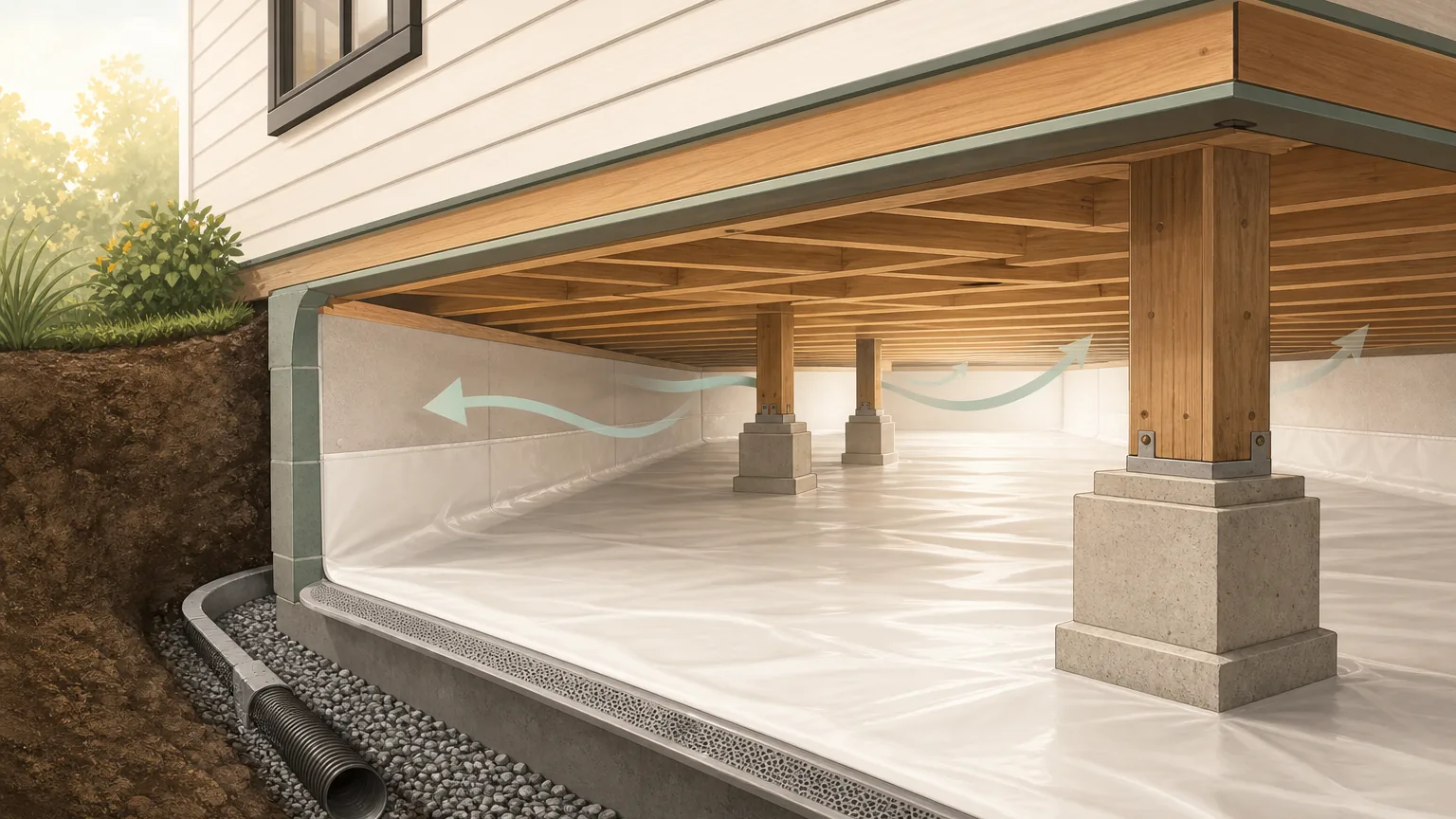
A crawl space vapor barrier helps separate the home from ground moisture. Homeowners near Gastonia often ask for help when the plastic is torn, thin, pulled away from walls or piers, or missing across large sections of soil.
- Damp soil or condensation under the home
- Musty smells near floors, closets, or vents
- Old plastic that is torn, dirty, loose, or incomplete
- Wet insulation, pest activity, or muddy access paths
- Interest in encapsulation, sealing, drainage, or humidity control
What a provider can review
A local provider can look at ground coverage, seams, wall attachment, pier detail, drainage conditions, and whether the crawl space needs repair before new material is installed.
Repair, partial replacement, or full replacement
Small isolated tears may support a repair when the remaining material is secure and compatible. Widespread brittleness, missing coverage, failed seams, heavy contamination, repeated movement, or a changed drainage plan may support broader replacement. Ask the provider to explain why the existing material can or cannot remain.
Details to compare beyond thickness
- Product manufacturer, intended use, thickness, reinforcement, puncture resistance, and warranty
- Soil preparation, debris removal, seam overlap and sealing, perimeter treatment, piers, and penetrations
- Drain, sump-lid, access-door, and traffic-path details
- Termite inspection visibility and future access
- How standing water, discharge, humidity, and damaged insulation will be handled
When this is a vapor-barrier, waterproofing, or encapsulation question
This page fits homeowners who mainly need ground cover reviewed, repaired, replaced, or extended. If the request is closer to crawl space waterproofing, standing water, or a full encapsulation plan, a provider may need to review drainage and humidity control before recommending liner work.
For broader sealing work, see crawl space encapsulation in Gastonia. If liquid water returns after rain or collects under the home, use crawl space waterproofing for bulk-water control. If moisture has already damaged wood or insulation, start with crawl space repair help.
What affects vapor-barrier cost
Cost changes with square footage, clearance, debris and old-material removal, soil condition, product selection, seam and pier complexity, wall attachment, drains and sump details, access paths, standing-water corrections, termite-visibility requirements, and repairs discovered during preparation.
Final checks and maintenance
Walk through coverage and exclusions using completion photos. Confirm that drains and sumps remain usable, traffic areas have appropriate protection, discharge does not return toward the foundation, and any stated inspection gap remains visible. Recheck accessible edges and seams after service visits or water events.
Compare scopes in the vapor barrier versus encapsulation guide.
Helpful homeowner guidance
What official guidance says about ground coverage
Ground coverage controls soil moisture only when it belongs to a wider plan for drainage, humidity, access, and inspection.
- NC State Extension recommends at least 6 to 8 mil plastic covering crawl-space soil and also calls for leak, sump, humidity, gutter, downspout, and grading checks.
- Gaston County inspection guidance identifies complete crawl-space soil coverage as a recurring inspection item.
- The Department of Energy retrofit guide checks seams, penetrations, sump lids, floor drains, walls, columns, traffic protection, and pest inspection gaps.
Sources: NC State Extension mold and moisture checklist, Gaston County inspection turn-down list, Department of Energy crawl-space guide
Disclosure: Gastonia Crawl Space Repair Help is an independent service that helps connect homeowners with local crawl space professionals. We do not perform contractor services ourselves. Your request may be shared with a local provider who can assist with your project.
Vapor barrier request
Ask about torn, missing, or loose ground cover
Use this request when the main concern is exposed soil, thin plastic, loose seams, muddy access, or damp ground under the home. If the crawl space also has standing water or damaged wood, include that so the request can be reviewed correctly.
- Describe where the barrier is missing or damaged.
- Mention puddles, damp soil, odor, or wet insulation.
- Describe what any existing photos show. A provider may request the files after contact.
Common vapor barrier questions
What does a crawl space vapor barrier do?
A vapor barrier helps separate the home from ground moisture by covering the soil with a durable plastic layer that prevents dampness from evaporating up into the crawl space and eventually into the living areas above.
How do I know if my vapor barrier needs attention?
Signs that a vapor barrier may need review include damp soil or visible condensation under the home, musty smells near floors or vents, old plastic that is torn, dirty, loose, or incomplete, wet insulation, pest activity, or muddy access paths.
What is the difference between a vapor barrier and full encapsulation?
A vapor barrier focuses on ground coverage while full encapsulation also includes wall liners, sealed vents, an airtight access door, and sometimes a dehumidifier. Full encapsulation costs more because it covers more surface area and may require adjustments to the ventilation system.
Should I get a vapor barrier first or encapsulation?
If the crawl space mainly needs ground coverage reviewed, repaired, replaced, or extended, a vapor barrier may be the right starting point. For full crawl space sealing including wall liner, access door sealing, and humidity planning, encapsulation is the more complete solution.
Do thicker vapor barriers always perform better?
Thickness is one specification. Material strength, puncture resistance, seam treatment, attachment, surface preparation, traffic protection, and installation around piers and penetrations also affect durability. Compare the actual product data and written installation scope.
How should a vapor barrier be maintained?
Inspect accessible seams, edges, traffic paths, pier details, penetrations, drains, and sump lids for movement, tears, standing water, or pest damage. Repair the moisture source and liner damage according to the written system instructions.