Basic vapor barrier
Covers the soil with ground-cover material, often 6-mil polyethylene, while vents may remain open. A dry-ish crawl space with minor ground moisture may need only this $1,000 to $4,000 scope.
Method comparison
Compare the actual surfaces, water plan, humidity control, permit needs, and maintenance in each written scope.
Disclosure: Gastonia Crawl Space Repair Help is an independent service that helps connect homeowners with local crawl space professionals. We do not perform contractor services ourselves. Your request may be shared with a local provider who can assist with your project.
Homeowner request path
Gastonia, NCQuick answer: A basic vapor barrier covers the soil with material such as 6-mil polyethylene and may leave the crawl space vented. Full encapsulation seals the floor and walls with reinforced 12-mil to 20-mil liner, closes vents and access, and controls humidity with equipment such as a dehumidifier. Compare the water history and current liner to request local contact.
Covers the soil with ground-cover material, often 6-mil polyethylene, while vents may remain open. A dry-ish crawl space with minor ground moisture may need only this $1,000 to $4,000 scope.
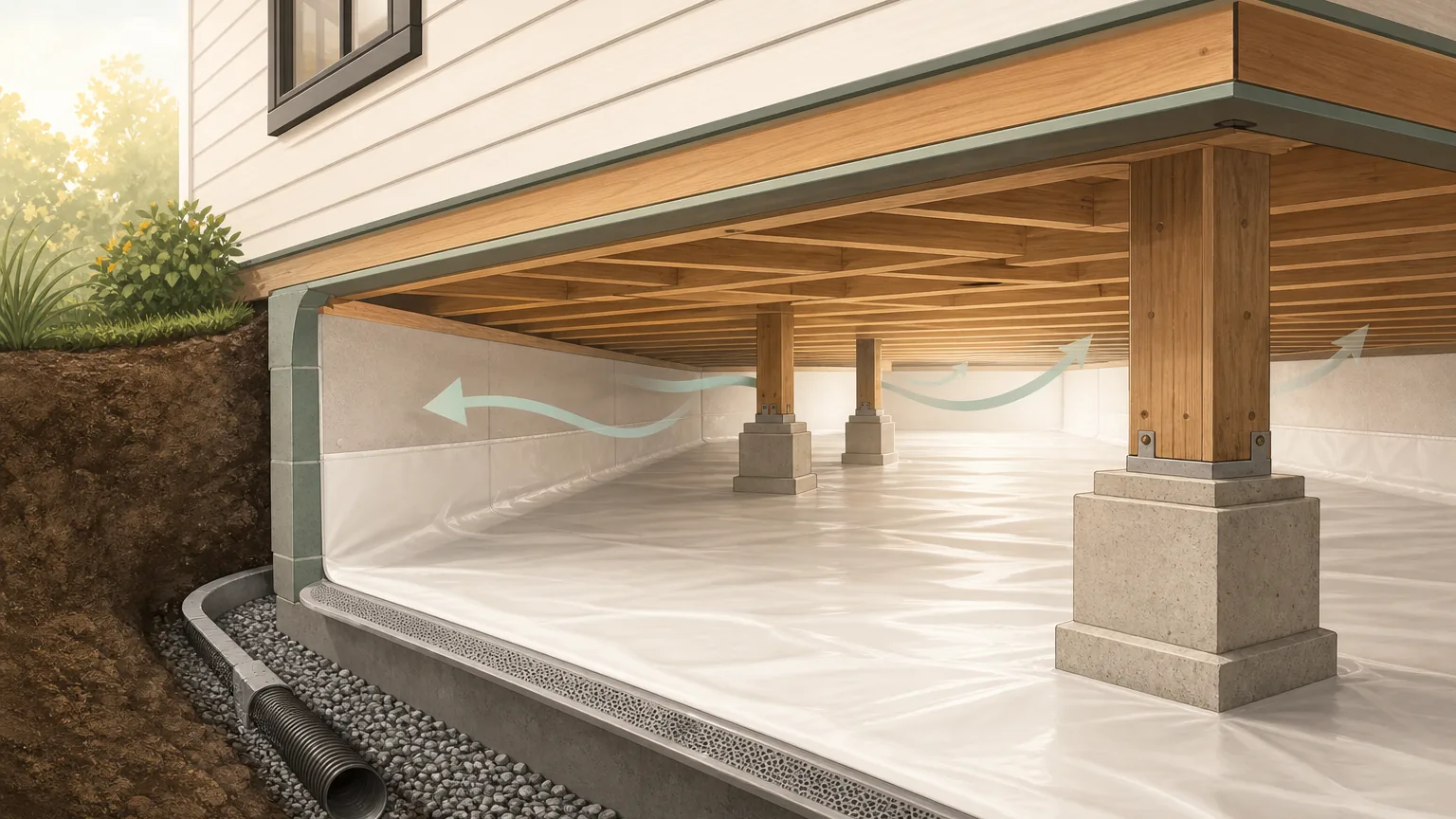
Seals the floor and foundation walls with reinforced 12-mil to 20-mil liner, closes vents and access, and adds active humidity control. Humid, wet, musty, or mold-prone conditions may support this $5,000 to $15,000 scope after drainage is handled.
Inspect active leaks, roof runoff, grading, foundation entry, groundwater, drains, sump equipment, pests, debris, unsafe wiring, fuel-burning equipment, wet insulation, and structural concerns. Ground cover and enclosure work should match the source and leave required systems serviceable.
A basic scope may fit when the crawl space is otherwise dry, exposed soil is the main moisture source, liquid water is controlled, vents remain part of the design, and existing material needs repair or replacement rather than full wall and air sealing.
A closed approach may fit when humid North Carolina summers, recurring musty odor, exposed walls, broad liner failure, or mold-prone conditions call for a sealed enclosure and active humidity control. Liquid-water prerequisites still come first.
Pause when water reaches wiring, sewage or contaminated water is present, structural movement is changing quickly, a major plumbing leak continues, fuel-burning equipment has not been evaluated, or the proposed outlet and permit path remain unclear.
A basic ground-cover vapor barrier commonly runs $1,000 to $4,000. Full encapsulation commonly runs $5,000 to $15,000, and a dehumidifier outside the base scope may run $1,000 to $3,000. Compare drainage, equipment, electrical work, permits, insulation, cleanup, electricity, filters, condensate, sump testing, alarms, liner repairs, pest inspections, and service access.
Read the full vapor-barrier page, encapsulation page, and maintenance guide.
Helpful homeowner guidance
North Carolina and federal guidance draws a wider boundary around enclosure work than ground plastic alone.
Sources: NC closed crawl-space permit interpretation, Department of Energy crawl-space guide
Disclosure: Gastonia Crawl Space Repair Help is an independent service that helps connect homeowners with local crawl space professionals. We do not perform contractor services ourselves. Your request may be shared with a local provider who can assist with your project.
Comparison request
Share whether water appears after rain, the current liner condition, humidity readings, insulation, vents, and the outcome you want.
A basic vapor barrier primarily covers soil. Encapsulation is a coordinated closed-crawl-space scope that may treat ground, walls, piers, seams, vents, penetrations, access, insulation, and humidity control after prerequisites are handled.
Recurring liquid water should be traced and addressed in the drainage plan first. Covering the surface can hide the source and complicate future service.
A basic ground-cover vapor barrier commonly runs $1,000 to $4,000. Full encapsulation commonly runs $5,000 to $15,000 because it adds wall coverage, sealed vents and access, heavier liner, humidity control, and a larger installation scope.
Office of State Fire Marshal guidance for North Carolina ties the permit requirement to converting conventional crawl-space venting into closed construction under the cited code pathway. Confirm the requirements that currently apply locally.
Ask each provider to mark every treated surface and component, identify prerequisites, list materials and equipment, state permit responsibility, explain humidity control, and provide maintenance and warranty terms.