Tell us what you are seeing
Share the main issue, the property city, and the best way to reach you.
Damaged insulation help
Wet, fallen, or contaminated crawl space insulation can trap moisture and odor under the home. Request contact from a provider serving the Gastonia area.
Disclosure: Gastonia Crawl Space Repair Help is an independent service that helps connect homeowners with local crawl space professionals. We do not perform contractor services ourselves. Your request may be shared with a local provider who can assist with your project.
Homeowner request path
Gastonia, NCQuick answer: Waterlogged, fallen, pest-contaminated, moldy, or odor-holding insulation should come out after the source and entry hazards are identified. Removal commonly runs $0.75 to $2 per square foot, while removal and replacement often totals about $2,000 to $4,000. Share the material condition and whether it worsens after rain to request local contact.
Crawl space insulation can lose usefulness when it becomes wet, loose, torn, pest-damaged, or packed with debris. Removal is often the first step before moisture control, vapor barrier work, encapsulation, or new insulation planning.
A local provider can look at access, insulation condition, moisture sources, visible wood concerns, vapor barrier coverage, and whether removal should happen before repair or encapsulation work.
Fiberglass batts, rigid board, loose material, and spray-applied products require different removal, containment, disposal, and repair methods. Ask the provider to identify the material and check for suspect asbestos-containing products, pest waste, sewage, visible growth, wiring, ducts, and restricted access before work starts.
Fiberglass batts are inexpensive, but wet fiberglass holds water, loses R-value, sags, and traps dust and debris where growth can occur. Because those failures recur in humid crawl spaces, many closed-crawl scopes do not recommend reinstalling batts between the joists. Rigid foam board and closed-cell spray foam resist moisture better, though each needs correct fastening or adhesion, sealed joints, fire detailing, termite visibility, and access for future wiring or plumbing work.
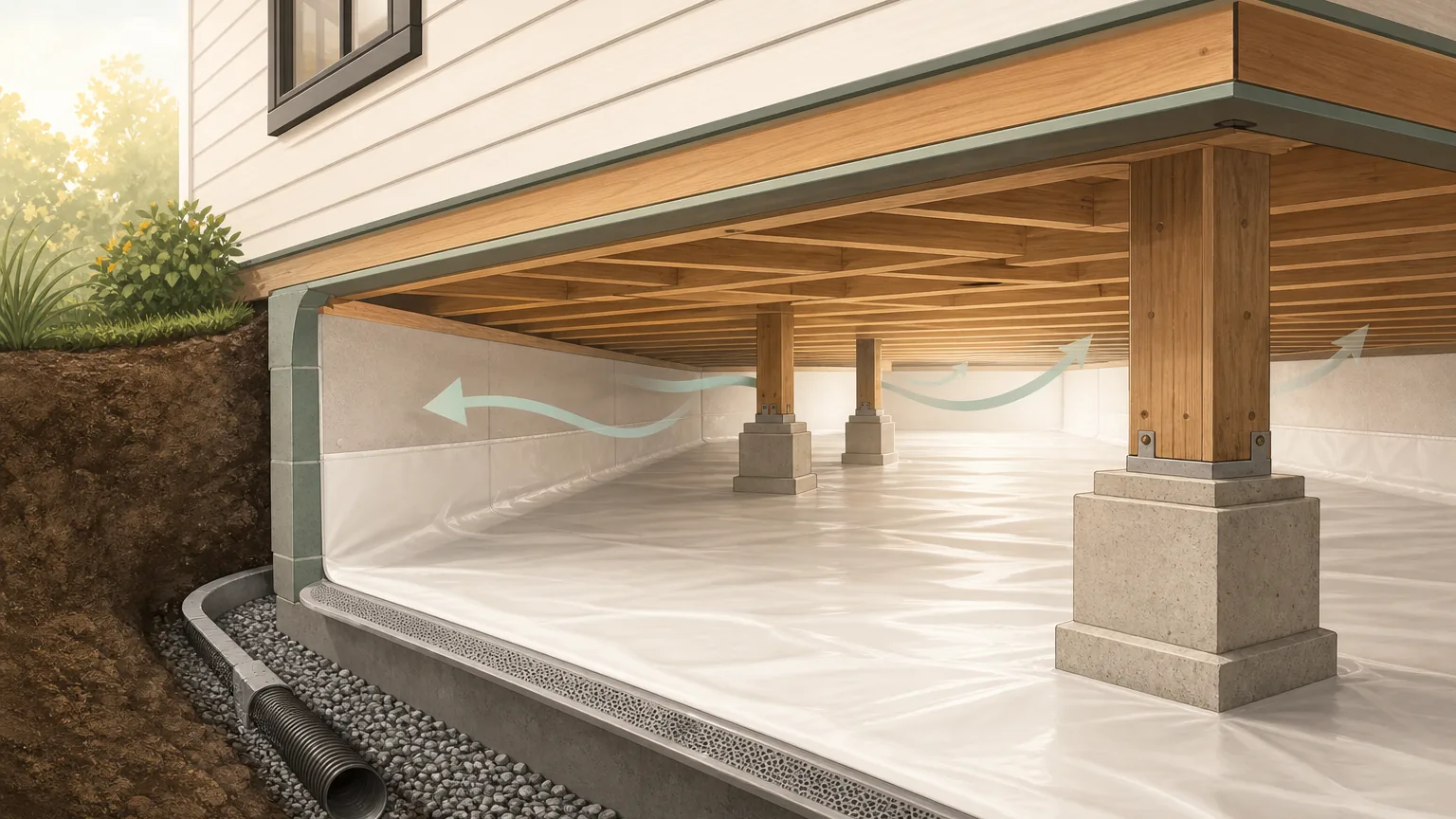
In a conventionally vented crawl space, insulation may remain between the floor joists. In a permitted closed or encapsulated crawl space, insulating foundation walls and the band area is often preferred because the crawl space moves inside the conditioned boundary. The provider should explain why the floor or wall location matches the final venting, air-sealing, drainage, and humidity-control plan.
Removal commonly runs $0.75 to $2 per square foot, while removal and replacement often totals about $2,000 to $4,000. Crawl-space size and height, access, material type, saturation, pest or mold contamination, containment, bagging, disposal, wiring and ducts, framing cleanup, and source correction determine the final scope.
Request help sooner when insulation is dripping, blocking the access path, touching standing water, holding a strong odor, hiding visible wood damage, or falling near wiring or mechanical equipment. Stay out when water, electrical, pest, or contamination risks make entry unsafe.
Share the main issue, the property city, and the best way to reach you.
We route the request so a local crawl space provider can follow up when available.
The provider can discuss inspection timing, repair options, and pricing factors.
Related help includes crawl space repair in Gastonia, moisture control, vapor barrier help, and crawl space encapsulation.
Helpful homeowner guidance
Insulation condition, contaminants, drainage, mechanical systems, and the final crawl-space design affect safe removal and replacement.
Sources: Department of Energy crawl-space guide, NC closed crawl-space permit interpretation
Disclosure: Gastonia Crawl Space Repair Help is an independent service that helps connect homeowners with local crawl space professionals. We do not perform contractor services ourselves. Your request may be shared with a local provider who can assist with your project.
The decision depends on material, duration, contamination, damage, and whether it can be dried and restored according to applicable guidance. Saturated, fallen, pest-damaged, odor-holding, or visibly contaminated material often requires removal review.
Correct active water, plumbing, condensate, humidity, pest, and air-leak sources. Confirm whether the crawl space will remain vented or become a permitted closed system because that affects insulation location and detailing.
Fiberglass batts are inexpensive but lose performance when wet and often sag in humid crawl spaces. Rigid foam board and closed-cell spray foam resist moisture better but require correct fastening, sealing, fire detailing, termite visibility, and future service access.
Animal waste, carcasses, sewage, extensive fungal growth, and suspect asbestos-containing material can require added containment, disposal, testing, or qualified specialists.
Insulation removal commonly runs $0.75 to $2 per square foot, while removal and replacement often totals about $2,000 to $4,000. Material type and quantity, clearance, access, moisture, contamination, pests, containment, disposal, wiring, ducts, and source repairs affect the scope.