Musty odor help
Crawl Space Mold and Musty Odor Concerns in Gastonia, NC
Musty smells can start under the home when moisture, damp insulation, or organic growth concerns stay trapped in the crawl space. Request contact from a provider serving Gastonia and nearby communities.
Disclosure: Gastonia Crawl Space Repair Help is an independent service that helps connect homeowners with local crawl space professionals. We do not perform contractor services ourselves. Your request may be shared with a local provider who can assist with your project.
Homeowner request path
Gastonia, NC- Share the crawl space issue you are seeing.
- Choose repair, encapsulation, moisture, drainage, or support help.
- Get connected with a local provider when available.
Quick answer: Mold and musty odor return when cleanup leaves the moisture source in place. The sequence is containment and removal, drying, then drainage or humidity correction before optional sealing. Crawl-space mold cleanup commonly runs about $500 to $4,000. Share when the odor is strongest and whether water, wet insulation, or visible growth is present to request local contact.
What homeowners usually notice first
Odor problems often show up before a homeowner sees the crawl space. You may notice a musty smell near floor vents, closets, bedrooms, or the access door after rain or humid weather.
- Musty air moving into rooms above the crawl space
- Wet, fallen, or dirty insulation holding odors
- Dark staining or visible growth concerns on wood or insulation
- Damp soil, missing vapor barrier coverage, or condensation
- Odors that get stronger after storms or hot, humid days
When the issue needs urgent attention
Request help quickly when odor comes with standing water, soft floors, visible wood damage, heavy condensation, or recurring allergy-like irritation inside the home. A provider can review moisture sources before recommending cleanup or sealing work.
How crawl-space remediation works
- Contain the work area. Limit the movement of dust and spores into occupied rooms while affected material is disturbed.
- Remove the contamination. Clean surface growth with a high-efficiency particulate air (HEPA) vacuum or another material-appropriate method where the surface can be saved. Bag and remove wet insulation, debris, and other porous material that cannot be cleaned completely.
- Clean and dry what remains. Treat remaining surfaces as appropriate for the material, remove settled debris, and dry the framing instead of simply spraying or painting over growth.
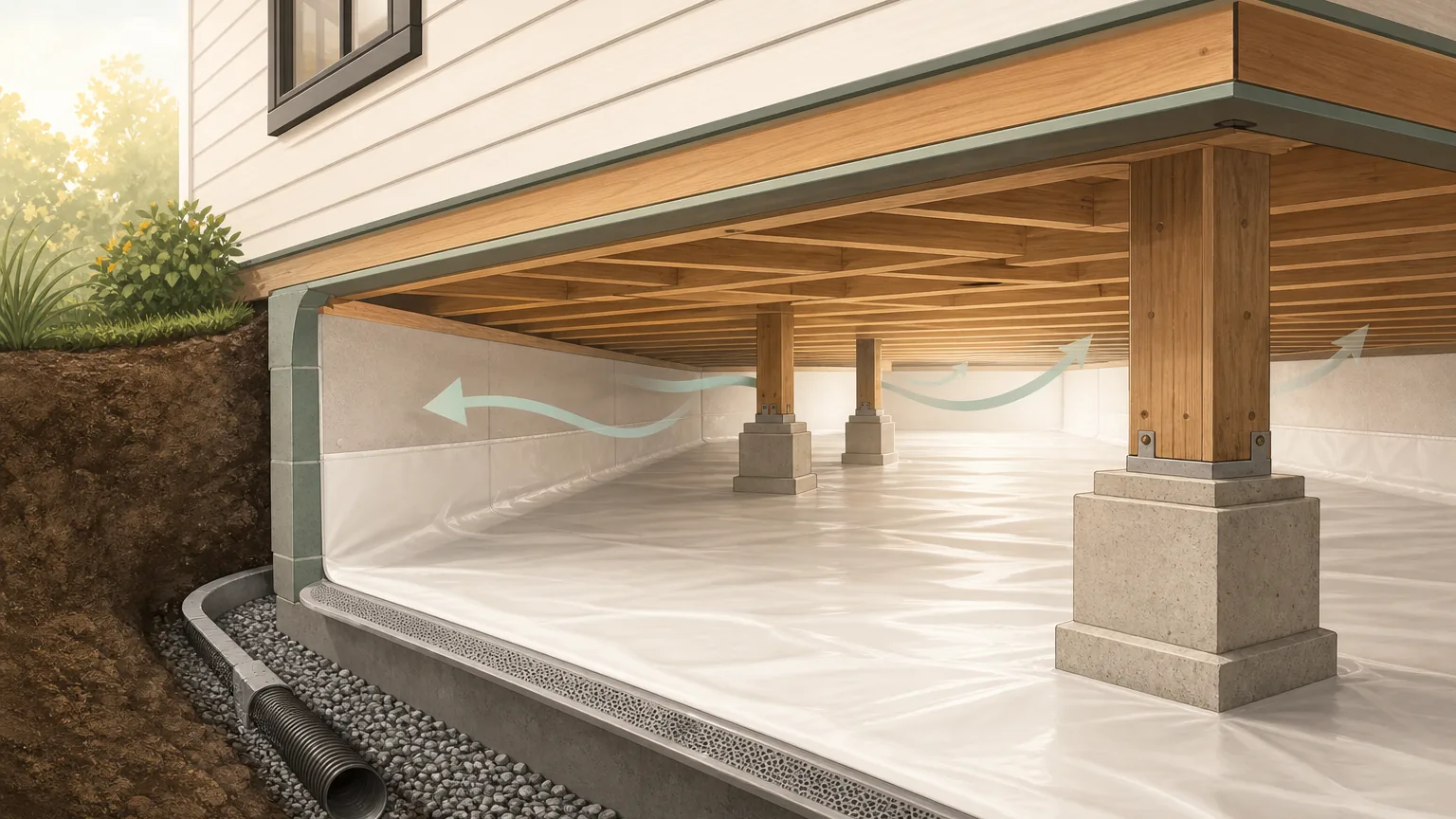
- Correct the moisture source. Repair leaks, drainage, ground vapor, condensation, or high humidity before optional vapor-barrier or encapsulation work. Killing growth without removing it and fixing moisture allows it to return.
Why the odor can reach rooms above
Musty odor often comes from microbial volatile organic compounds (mVOCs) released as fungi and bacteria grow on damp material. Air leakage and the stack effect pull crawl-space air, odor, and particles toward rooms above. A North Carolina study also found that heating and cooling duct leakage can carry viable mold spores from some crawl spaces into living areas.
Surface mold versus wood-decay fungi
Surface mold or staining can affect the face of wood without proving that the member has lost structural capacity. Wood-decay fungi break down the wood itself and can leave framing soft, cracked, stringy, or crumbly. Suspected rot belongs in the repair scope, while species identification and health conclusions should not come from a photo alone.
Visible growth, testing, and identification limits
A photo or visual inspection cannot establish a species or medical risk. EPA guidance says testing is generally unnecessary when growth is visible. The practical questions concern the moisture source, affected area and materials, safe containment, removal or cleaning method, and how the work will be verified.
When professional remediation guidance matters
EPA points homeowners toward added professional guidance when the affected area exceeds about 10 square feet, water damage is extensive, sewage or contaminated water is involved, heating and cooling contamination is suspected, or health concerns exist. Do not run a heating and cooling system that is known or suspected to be contaminated.
Porous and hard materials
EPA says hard surfaces can often be scrubbed with detergent and water and dried completely. Porous materials may need disposal when growth cannot be removed from their spaces. The actual crawl-space scope should identify insulation, liner, stored items, wood, ducts, and other affected materials separately.
Health guidance without guessing
Mold can cause allergic reactions in sensitive people and can trigger asthma attacks in people with asthma who are allergic to mold. Irritation can also occur. These facts support moisture correction and careful cleanup; they do not identify a species or diagnose a household symptom.
What cleanup can cost
Crawl-space mold cleanup commonly runs about $500 to $4,000. Wet insulation and debris removal, broad containment, difficult access, heating and cooling involvement, wood decay, and correction of drainage or humidity sit outside a simple surface-cleaning scope. Use the cost guide to compare those line items.
Completion checks
- The leak, drainage, humidity, or condensation source has been corrected.
- Affected areas are dry and visible debris has been removed.
- Cleaned or replaced materials and hidden cavities match the written scope.
- Odor, humidity, and moisture conditions are monitored after completion.
- Heating and cooling equipment is handled according to qualified guidance when contamination was suspected.
What to ask before hiring a provider
- Will you look for the moisture source before recommending odor treatment?
- Can you check insulation, wood, drainage, and vapor barrier condition during the visit?
- Will the quote explain cleanup, prevention, and any repair work separately?
- Can you show photos of the crawl space findings before work begins?
Related help includes crawl space repair in Gastonia, moisture control, insulation removal, standing water guidance, and encapsulation.
Helpful homeowner guidance
EPA guidance starts with moisture control
Cleanup decisions depend on area, material, water source, mechanical-system involvement, and household health concerns.
- EPA says the key to mold control is moisture control and advises drying water-damaged areas within 24 to 48 hours.
- EPA says testing is generally unnecessary when visible mold is present and uses about 10 square feet as one homeowner cleanup decision point.
- EPA recommends experienced help for extensive damage, contaminated water, suspected heating and cooling contamination, or health concerns.
- A North Carolina study of 238 homes found mold-spore transmission from the crawl space into the living area in 19% of homes; 36% were indeterminate.
Sources: EPA mold and moisture guide, NC State Extension mold and moisture checklist, North Carolina crawl-space mold study
Disclosure: Gastonia Crawl Space Repair Help is an independent service that helps connect homeowners with local crawl space professionals. We do not perform contractor services ourselves. Your request may be shared with a local provider who can assist with your project.
Request mold or odor concern help
Common mold and odor questions
What causes musty smells in a crawl space?
Musty smells can come from microbial volatile organic compounds released as fungi and bacteria grow on damp material. Air leakage and the stack effect can pull crawl-space air and odor into first-floor rooms, closets, and floor openings.
When should crawl space odor problems be addressed urgently?
Request help quickly when odor comes with standing water, soft floors, visible wood damage, heavy condensation, or recurring allergy-like irritation inside the home. A provider can review moisture sources before recommending cleanup or sealing work.
Can odor cleanup alone fix the problem?
No. Cleanup should contain the work area, clean surface growth with a high-efficiency particulate air (HEPA) vacuum where appropriate, discard porous material that cannot be cleaned, treat remaining surfaces as appropriate, and correct the water or humidity source. Killing growth without removing it and fixing moisture allows the problem to return.
How much does crawl space mold cleanup cost?
Crawl-space mold cleanup commonly runs about $500 to $4,000 as a general planning range. The affected area, wet insulation or debris removal, contaminated heating and cooling components, wood damage, access, and the moisture correction determine the final scope.
What questions should I ask a provider about mold or odor concerns?
Ask whether they will look for the moisture source before recommending odor treatment, if they can check insulation, wood, drainage, and vapor barrier condition during the visit, whether the quote explains cleanup, prevention, and any repair work separately, and if they can show photos of the crawl space findings before work begins.
Do I need a mold test when growth is visible?
EPA guidance says testing is generally unnecessary when visible mold is present. The priority is to correct the moisture source and clean or remove affected material safely.
When does EPA recommend additional professional guidance?
EPA points to areas larger than about 10 square feet, extensive water damage, sewage or contaminated water, suspected heating and cooling contamination, and health concerns as situations requiring added care or professional guidance.