After-rain water or mud
Check runoff, downspouts, grading, foundation entry, groundwater, drains, sump equipment, and discharge.
Indoor warning signs
Use this guide when musty rooms, soft floors, indoor humidity, or recurring odors suggest a problem below. The water checklist covers what to document safely after rain.
Disclosure: Gastonia Crawl Space Repair Help is an independent service that helps connect homeowners with local crawl space professionals. We do not perform contractor services ourselves. Your request may be shared with a local provider who can assist with your project.
Homeowner request path
Gastonia, NCQuick answer: Relative humidity that stays above 60% and wood-moisture readings near or above 20% are warning signs that a crawl space is staying wet enough for fungal growth and eventual decay. Pair the readings with odor, condensation, insulation, and floor symptoms, then request local contact when the pattern persists or worsens.
Check runoff, downspouts, grading, foundation entry, groundwater, drains, sump equipment, and discharge.
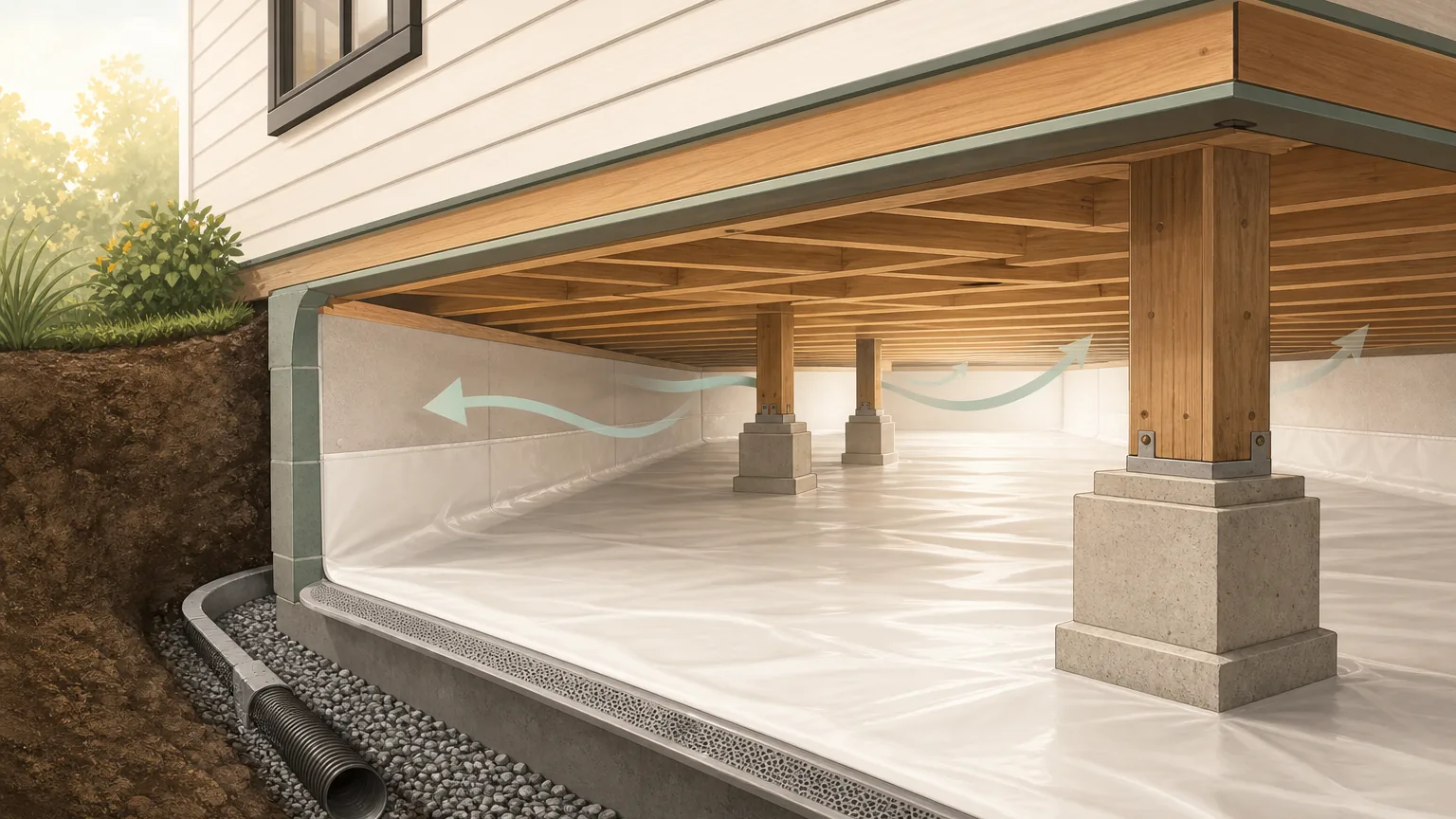
Check ground coverage, vent and access leakage, ducts, pipes, heating and cooling condensate, and measured humidity.
Check the water source, contamination, material condition, pests, and whether the crawl space remains vented or will follow a closed design.
Map rooms, joists, beams, piers, footings, moisture, pest evidence, plumbing, and change over time.
Write down the date, weather, affected rooms, indoor humidity if available, odor strength, floor change, water timing, plumbing or heating and cooling activity, and any alarm or pump event. Trends help a provider separate stormwater, humidity, equipment, and interior leaks.
Standing water often starts with drainage and water control. Odors and damp air may need moisture control. Torn liner material points toward vapor barrier help. Soft floors or damaged framing may need joist and support review. A known supply or drain leak belongs with a plumber, electrical exposure with an electrician, and pest evidence with a qualified pest professional.
If the first clue appeared after a storm, use the safe after-rain photo checklist to document visible water conditions from the access opening.
For budget planning after the source is identified, use the crawl-space repair cost guide. This diagnostic page does not turn a symptom into a repair quote.
Share the first symptom you noticed, when it happens, whether it gets worse after rain, and whether you can see water, damaged insulation, a torn vapor barrier, or floor movement. Photos from the access opening can help without putting you under the home.
Helpful homeowner guidance
Document what changed and route safety, water, humidity, material, pest, and structural concerns to the right review.
Sources: NC State Extension mold and moisture checklist, Building Science Corporation wood-moisture monitoring report
Disclosure: Gastonia Crawl Space Repair Help is an independent service that helps connect homeowners with local crawl space professionals. We do not perform contractor services ourselves. Your request may be shared with a local provider who can assist with your project.
Inspection request
A clear request should include odor, water, vapor barrier, insulation, and floor symptoms. That helps a local provider understand the likely scope before calling.
Common signs include relative humidity that stays above 60%, wood-moisture readings near or above 20%, condensation on ducts or pipes, musty odor, wet or fallen insulation, efflorescence, pest activity, and cupped, soft, or uneven floors above the crawl space.
Yes. Odors, humidity, and floor-support symptoms can show up upstairs when moisture remains under the home. A provider can inspect the crawl space and identify likely moisture sources.
A musty smell can point to damp materials or organic growth concerns, but this page does not diagnose mold. A qualified provider can inspect the area and explain whether cleanup, moisture control, or repair is needed.
Request help when moisture signs return after rain, insulation is wet or falling, wood looks stained or damaged, floors feel soft, or the crawl space smells musty from inside the home.
Record indoor humidity, dates, weather, affected rooms, odor timing, floor changes, and exterior drainage conditions. Photograph only from safe accessible locations and leave electrical, contaminated-water, pest, and unstable-framing concerns to qualified professionals.