After-rain photo guide
Crawl Space Water Photo Checklist After Rain in Gastonia, NC
Document what changed from the access opening without entering standing water. Use the moisture-signs guide when the first clues appear inside your living space.
Disclosure: Gastonia Crawl Space Repair Help is an independent service that helps connect homeowners with local crawl space professionals. We do not perform contractor services ourselves. Your request may be shared with a local provider who can assist with your project.
Homeowner request path
Gastonia, NC- Share the crawl space issue you are seeing.
- Choose repair, encapsulation, moisture, drainage, or support help.
- Get connected with a local provider when available.
What to photograph safely from the access opening
Do not enter standing water or crawl near wiring, pests, unstable materials, or contamination. From a safe access point, photograph the wettest area, the direction water appears to travel, and any affected insulation, liner, wall, or floor-support material you can see.
- Puddles, pooled water, or saturated soil that does not dry out between rains
- Dark staining or discoloration on wooden beams, joists, or posts
- Wet, sagging, or fallen insulation hanging from the floor above
- White powdery residue or efflorescence on concrete block walls
- Rust on metal supports, hangers, or vent covers
- Musty or earthy smell that gets stronger after rain or high humidity
- Buckling or cupping of hardwood floors in rooms above the crawl space
- Uneven or bouncy spots in the floor that were not there before
- Visible mold growth on wood surfaces or insulation
- Debris or sediment deposits that suggest recurring water flow
Create an event log
- Date, start time, rain timing, and when water became visible
- Affected side or room, visible depth if safely known, and how long water remained
- Whether water was clear, muddy, oily, sewage-like, or from a known plumbing source
- Indoor floor, odor, humidity, wall, door, or heating and cooling changes
- Pump, alarm, backup, power, drain, and discharge status
- People contacted, actions taken, receipts, and follow-up dates
Exterior photos to add
Photograph gutters, downspouts, extensions, low soil, erosion, foundation openings, vents, access door, drains, sump discharge, and the area where water exits. Use a wide view for location and a closer view for the condition.
Existing system inventory
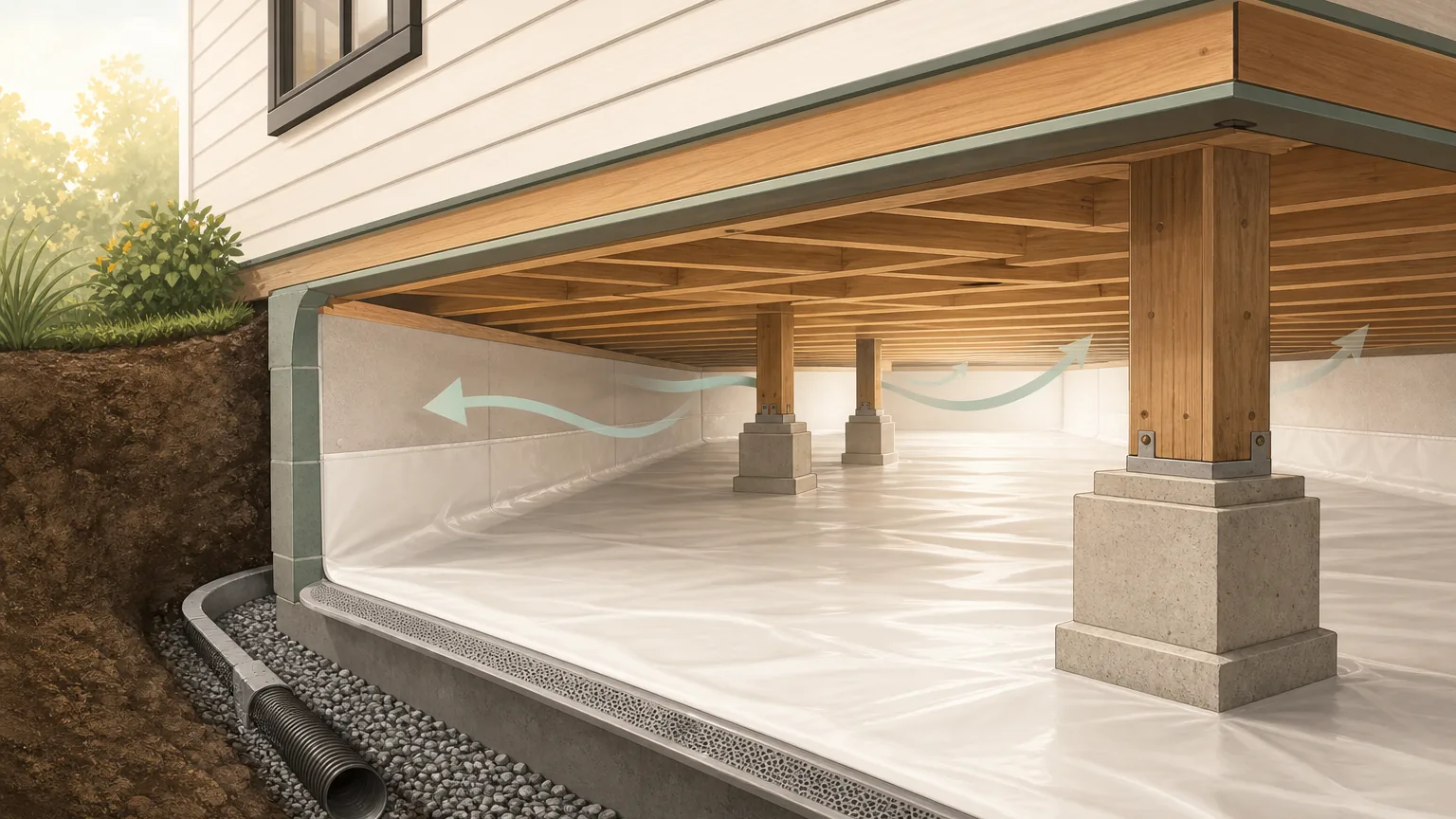
Record the liner type and condition, drains, sump basin and lid, pump model if visible without entry, alarm, backup, dehumidifier, condensate route, vents, access door, insulation, and any recent plumbing, pest, drainage, or foundation work.
What to do after you document the water
Avoid entry and improvised repairs when water, electrical, contamination, pest, or structural risks are present. Share the event log with the appropriate plumber, electrician, cleanup, structural, drainage, or crawl-space provider.
Prompt source correction and drying can limit additional material damage. The final scope should identify what can be dried, what needs removal, and how moisture conditions will be checked after repair.
What a provider will typically look for
A useful inspection checks exterior drainage, plumbing and condensate, ground coverage, drains and sump equipment, insulation, visible framing and supports, pests, humidity, and discharge. The report should connect each proposed correction to an observed source or damaged material.
Next step: compare crawl space waterproofing in Gastonia for active-water solutions or use the heavy-rain safety guide when water blocks access or reaches electrical equipment. The indoor moisture-signs guide covers musty rooms, soft floors, and other clues noticed upstairs.
Disclosure: Gastonia Crawl Space Repair Help is an independent service that helps connect homeowners with local crawl space professionals. We do not perform contractor services ourselves. Your request may be shared with a local provider who can assist with your project.
Request a water damage assessment
Water documentation questions
What are the common signs of water damage in a crawl space?
Common signs include puddles or pooled water that does not dry out between rains, dark staining on wooden beams or joists, wet or sagging insulation hanging from the floor above, white powdery residue on concrete block walls, rust on metal supports or vent covers, and musty smell that gets stronger after rain or high humidity.
When should I request professional help for crawl space water damage?
Request help if you find standing water, soft wood, or suspect mold. Note what you observed, take photos from the access door if it is safe to do so, and request help from a crawl space provider who can assess the full extent of the damage.
What does a crawl space professional check for during an inspection?
A professional will typically check the grade around the home foundation, inspect the current vapor barrier for tears or gaps, look for signs of water intrusion near the footing or walls, and assess the condition of insulation and wooden supports.
What are the risks of ignoring water damage in a crawl space?
Long-standing moisture problems can weaken structural supports, damage insulation beyond repair, and create conditions where mold concerns develop throughout the home. Water damage that is caught early is usually less expensive to address.
What should I write down after a water event?
Record the date, weather, first observation time, affected side, visible depth if safely known, duration, source clues, rooms above, pump or alarm status, power outage, plumbing activity, and contacts or actions taken.