Drainage-system guide
Crawl Space Sump Pump and Drainage Planning in Gastonia
Trace the water source, collection path, pump, power, and final outlet before comparing equipment.
Disclosure: Gastonia Crawl Space Repair Help is an independent service that helps connect homeowners with local crawl space professionals. We do not perform contractor services ourselves. Your request may be shared with a local provider who can assist with your project.
Homeowner request path
Gastonia, NC- Share the crawl space issue you are seeing.
- Choose repair, encapsulation, moisture, drainage, or support help.
- Get connected with a local provider when available.
A sump pump handles collected water
A sump serves water delivered to its basin. See the drainage and standing-water guide for source timing, pump-type differences, check-valve function, and collection-path construction; use this guide to compare estimate components, power protection, outlet verification, and maintenance.
Map the drainage path
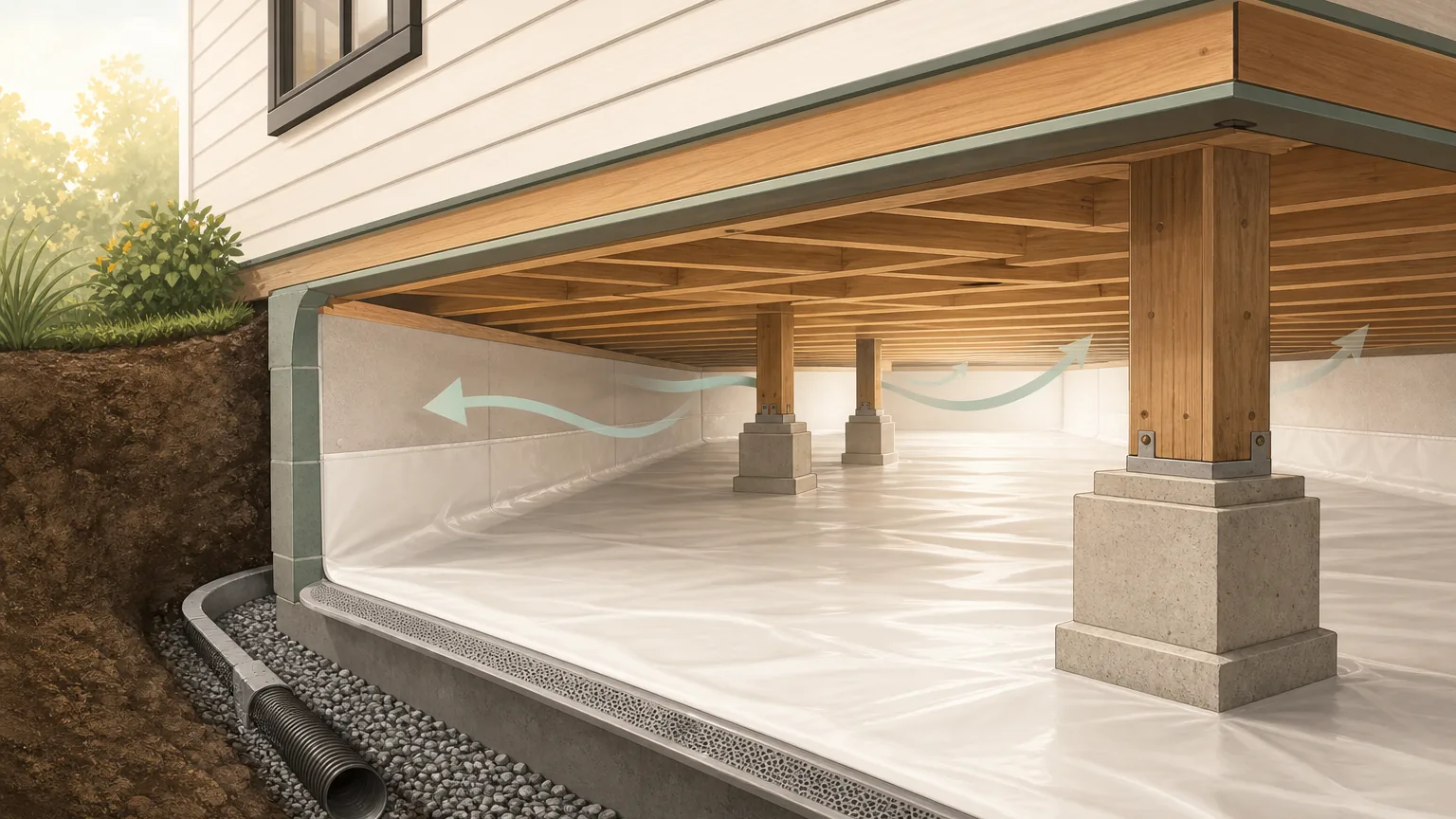
The drainage guide explains how entry points, the collection route, basin, pump, and outlet fit together before equipment is selected.
Components to compare
- Drain channel, pipe, aggregate, filter detail, cleanouts, and connection to the basin
- Basin size, sealed lid, service access, and liner connection
- Pump model, capacity curve, switch type, and check valve
- Dedicated electrical needs, alarm, secondary pump, battery, or generator plan
- Discharge pipe, fittings, freeze and blockage protection, termination, and erosion control
Backup and alarm questions
Ask what event the backup covers, how long it can operate, how capacity compares with the primary pump, how it is tested, and when batteries require replacement. A high-water alarm can provide warning without removing water, so include the human response plan.
Discharge deserves a final walkthrough
Follow the pipe to its outlet. Confirm that pumped water does not return toward the foundation, disappear into an unknown connection, discharge into a blocked area, or create erosion.
Maintenance checklist
- Remove safe, accessible debris that could block the inlet or switch.
- Test the primary pump, alarm, and backup using the written procedure.
- Inspect the check valve and discharge for leaks, movement, freezing, blockage, or return flow.
- Clean drains and replace batteries or filters on schedule.
- Record test dates and investigate changes in run frequency.
What affects system cost
Collection length, excavation, soil, clearance, basin and pump selection, backup and alarms, electrical work, discharge distance, outlet work, permits, liner restoration, debris, and exterior corrections can change the quote.
Related help: waterproofing, standing-water diagnosis, urgent water safety, and documentation checklist.
Helpful homeowner guidance
Trace water from entry to outlet
Local and federal guidance supports evaluating the entire drainage path.
- At the outlet walkthrough, Gaston County inspection checkpoints pair drainage away from the building with daylight termination and protection against rodent entry.
- NC State Extension places sump operation inside a wider source check that includes foundation cracks, plumbing, gutters, downspouts, and grade.
- The Department of Energy review sequence connects sump equipment and drain pipes with standing water, plumbing, condensate, and exterior drainage before closure.
Sources: Gaston County inspection turn-down list, NC State Extension mold and moisture checklist, Department of Energy crawl-space guide
Disclosure: Gastonia Crawl Space Repair Help is an independent service that helps connect homeowners with local crawl space professionals. We do not perform contractor services ourselves. Your request may be shared with a local provider who can assist with your project.
Drainage request
Ask about a sump and discharge plan
Share water timing, wet locations, existing drains or pumps, power-outage history, and the visible discharge outlet.
Sump pump and drainage questions
Does every wet crawl space need a sump pump?
No. A sump pump serves water collected at its basin. Roof runoff, grading, plumbing, condensate, foundation entry, and a safe gravity outlet should also be evaluated before selecting the system.
What belongs in a sump pump estimate?
Ask for collection path, basin and sealed-lid details, pump model and capacity assumptions, check valve, alarm, backup option, electrical work, discharge route, testing, maintenance, and warranty.
Where should sump water discharge?
The outlet should follow current local requirements and release water where it will not return toward the foundation, create erosion, affect neighboring property, or form a blocked or freezing hazard. Confirm the site-specific outlet with the permit authority and provider.
What protects the home during a power outage?
Options may include a battery backup, secondary pump, generator connection, high-water alarm, or remote alert. Each has capacity, runtime, testing, replacement, and maintenance limits.
How often should a sump system be checked?
Use the manufacturer and installer schedule. Typical checks include the basin, inlet, float, pump, check valve, alarm, backup, power, discharge line, and final outlet, especially before wet seasons and after a major event.