Wood condition
Leaks, humidity, fungal decay, pests, notches, holes, and damaged connections can affect joists, beams, and subfloor.
Floor support concerns
Soft, uneven, or bouncy floors can point to crawl space moisture, wood damage, or support issues. Request contact from a provider serving the Gastonia area.
Disclosure: Gastonia Crawl Space Repair Help is an independent service that helps connect homeowners with local crawl space professionals. We do not perform contractor services ourselves. Your request may be shared with a local provider who can assist with your project.
Homeowner request path
Gastonia, NCQuick answer: Sagging-floor repair starts by mapping whether the symptom is bounce, slope, or a localized dip and tracing the load through joists, beams, posts, piers, and footings. A contained repair commonly runs $1,000 to $4,000, while broader work runs $4,000 to $12,000 and severe replacement can exceed $20,000. Share the affected rooms and whether movement is worsening to request local contact.
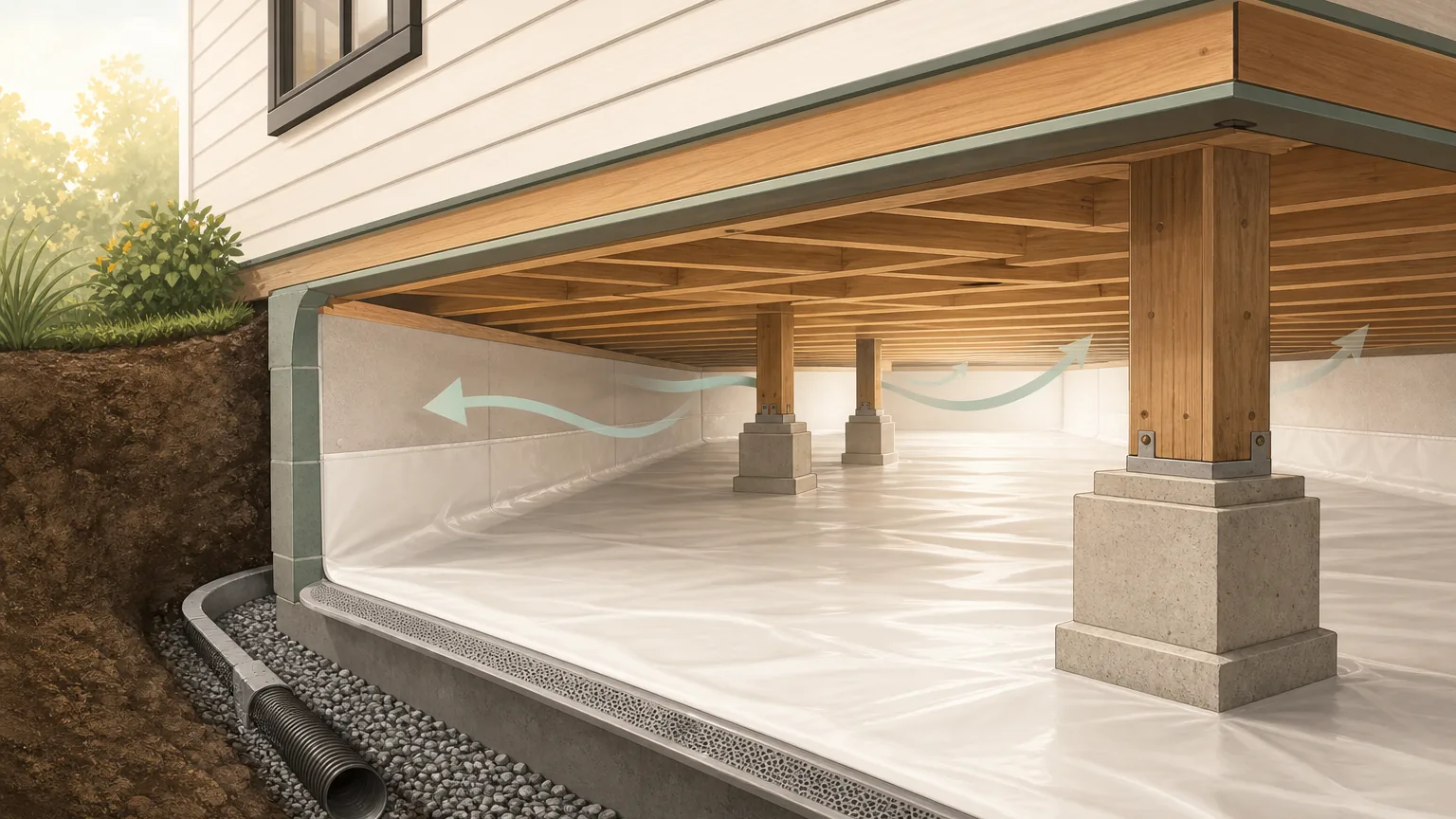
Some floor issues begin in the crawl space. Moisture, damaged joists, weakened beams, settling supports, or poor drainage can affect how floors feel inside the home.
A provider can review crawl space access, joists, beams, piers, drainage, and moisture conditions. The right next step depends on whether the issue is structural, moisture-related, or both.
Leaks, humidity, fungal decay, pests, notches, holes, and damaged connections can affect joists, beams, and subfloor.
Piers, columns, bearing, splices, footings, and soil movement affect how loads reach the ground.
Span, altered walls, removed supports, added loads, and prior repairs can change performance.
Room location, measurements, cracks, doors, plumbing, and change over time help map the symptom.
Bounce across a room can point to undersized or over-spanned joists. A steady slope may track to a settled pier, failed original post, or low beam. A localized dip can follow one cracked or rotted joist, plumbing damage, or a missing bearing point. Moisture-weakened framing and a failing girder can combine more than one pattern.
Fix the leak, drainage, humidity, or pest source with the structural work. New joists and beams can decay again when the crawl space remains wet.
Changing floor elevation can affect walls, doors, cabinets, finishes, plumbing, and connections. Gradual jacking over days or weeks gives the structure and finishes time to respond. This is dangerous do-it-yourself work: lifting too far or loading an inadequate footing can damage framing instead of correcting it.
A structural engineer may help with significant movement, unclear load paths, altered framing, multiple supports, footing or soil questions, or a designed repair. A pest professional may need to evaluate termite activity. Plumbing, drainage, electrical, and remediation work may also need to happen in sequence.
A contained joist, beam, or support area commonly runs $1,000 to $4,000. Broader structural work commonly reaches $4,000 to $12,000, while severe beam or framing replacement can exceed $20,000. The affected area, access, temporary shoring, lifting time, footings, engineering, permits, moisture correction, insulation removal, and finish damage determine the final scope.
Request faster review when a floor changes suddenly, feels unsafe to walk on, sinks near a wall or appliance, comes with cracking or sticking doors, or appears alongside standing water or visible wood damage. Avoid the affected area if the floor feels unstable.
Share the main issue, the property city, and the best way to reach you.
We route the request so a local crawl space provider can follow up when available.
The provider can discuss inspection timing, repair options, and pricing factors.
For related help, visit crawl space repair in Gastonia, use the joist, beam, and support guide, review crawl space moisture control, or compare crawl space waterproofing.
Helpful homeowner guidance
Local inspection guidance shows why joists, beams, piers, footings, drainage, and termite evidence belong in the same evaluation.
Sources: Gaston County inspection turn-down list, Department of Energy crawl-space guide
Disclosure: Gastonia Crawl Space Repair Help is an independent service that helps connect homeowners with local crawl space professionals. We do not perform contractor services ourselves. Your request may be shared with a local provider who can assist with your project.
Possible causes include wet or decayed wood, termites, altered or over-spanned framing, weak connections, damaged joists or beams, inadequate supports, pier or footing movement, soil settlement, and localized plumbing damage.
No. A localized joist may be sistered, while a weak span may need an intermediate beam and a settled support may need a new footing and adjustable steel post. The source and load path should be identified before support or lifting begins.
Engineer input may be useful when movement is significant, several supports are involved, framing was altered, footing or soil conditions are uncertain, or the repair design requires calculations or drawings.
The scope should coordinate active-leak correction, drainage, drying, pest treatment, contaminated-material removal, and structural access so the repair addresses its cause and remains inspectable.
Ask for mapped locations, measurements, photos, stated cause, materials and connections, footing or soil assumptions, lifting plan, engineering, permits, exclusions, completion tolerances, monitoring, and warranty.
A contained joist, beam, or support repair commonly runs $1,000 to $4,000. Broader structural work commonly reaches $4,000 to $12,000, while severe beam or framing replacement can exceed $20,000. Moisture correction, engineering, access, footings, and finish repairs can change the total.